Fire Piston
Caption:
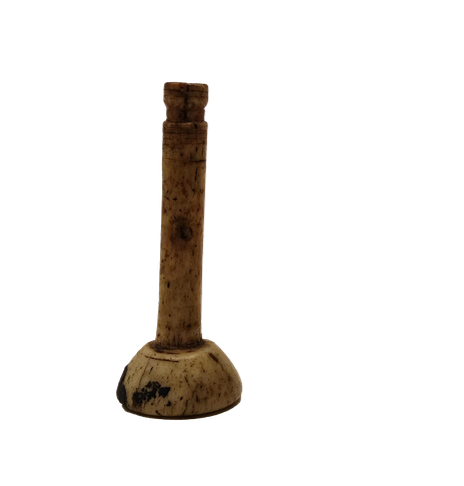
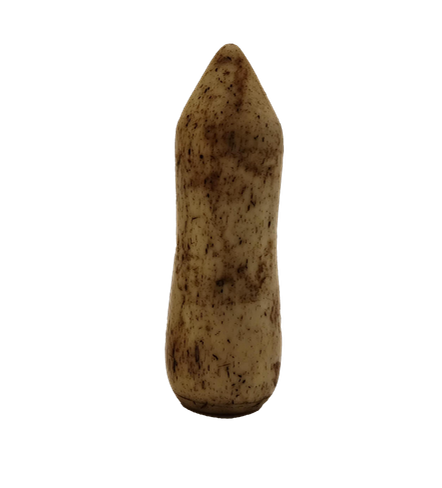
A fire piston (lek fai tob) is a traditional indigenous fire-making tool that was widely used in southern Thailand before the introduction of matches and modern lighting devices. In parts of central Thailand, it is known as a taban fai. While commonly crafted from hardwood, bamboo or animal horn, some fire pistons, such as this one, were made from ivory. In animist traditions and regional folklore, ivory was believed to possess protective qualities, allowing an ivory fire piston to not only serve practical purposes but also act as a talisman when travelling through dangerous areas.
The fire piston reflects the practical experimentation and technological knowledge of past generations, who developed tools closely adapted to their environments and the resources available at the time. The device operates through the principle of rapid air compression: when air inside the cylinder is compressed, heat is generated rapidly enough to ignite tinder. It consists of two primary components: a hollow cylinder (tua mia) and a piston rod (tua phu) inserted into it. The tip of the piston contains a small cavity for holding flammable dry tinder, such as fibre from the fishtail palm (tao rang) or kapok fluff. A thread or natural gasket lubricated with animal fat or resin creates an airtight seal, allowing efficient compression. Through a swift downward strike, the compressed air produces a sharp rise in temperature, igniting the tinder into an ember that can then be transferred to other fuels to create a flame.’
Certain practices reveal how this practical technology could simultaneously serve practical, spiritual and medical purposes. In some areas, for example, folk healers used the sharp ‘bang!’ produced by a fire piston as a protective act, believing it could frighten away harmful spirits and safeguard mothers and newborns.
The fire piston is documented in ancient Southern Thai manuscripts that preserve knowledge of traditional medicine, spiritual protection and folklore. Although the fire piston has today largely disappeared from daily use, it reveals how communities in Thailand transformed their understanding of the natural world and local materials into technologies that sustained everyday life.