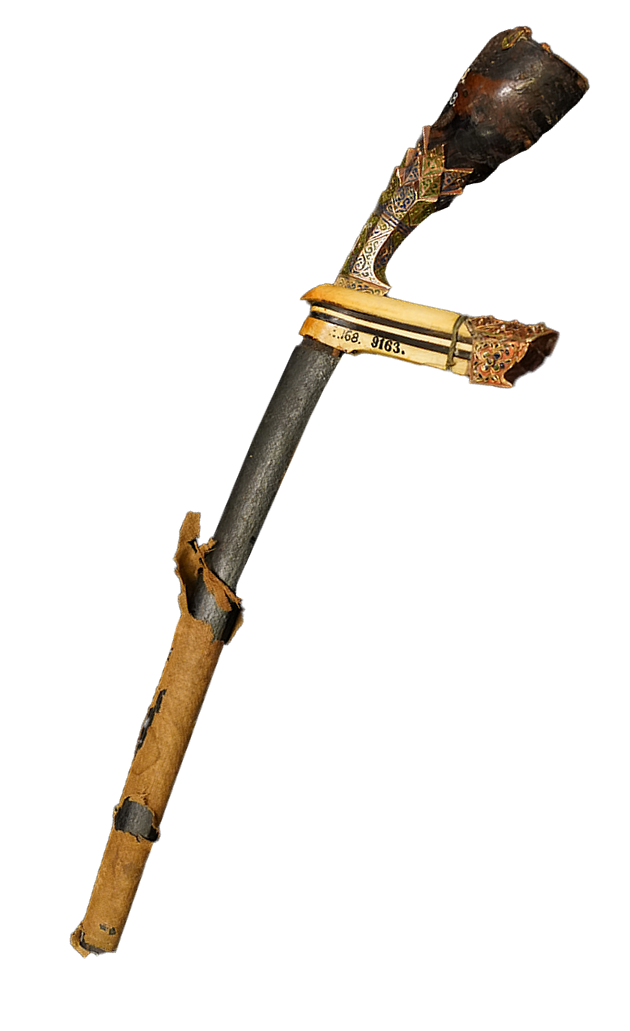
Siwaih
Caption:
A siwaih is a curved dagger derived from the Indian sewar and is traditionally worn through the belt. It features a chiselled metal blade, a crossguard of ivory, a collar of gold-copper alloy, a black coral pommel topped with high-carat gold filigree and enamelwork and a wooden scabbard. Its royal form, distinguished by a bulbous hilt and luxurious embellishments, was reserved for the sultan.
This dagger reveals how materials were woven into expressions of protection shared within and beyond the region. Its ivory crossguard – where a warrior's hand meets the blade – situates this protective material at the most physically and symbolically vulnerable juncture of combat. This barrier protects the hand while representing ivory’s associations with power and authority.
The construction and materials of the dagger reflect Aceh’s cosmopolitan networks of trade and craftsmanship. Aceh, located at the northern tip of Sumatra – commanding access to the Indian Ocean and the Malacca Strait – was, at its height, a major centre of Islamic learning and a gathering point for pilgrims travelling to Mecca. Renowned for its exceptional wealth and ceremonial processions, the court of Aceh sustained hundreds of specialist artisans, ranging from goldsmiths and silversmiths to weavers and wood-carvers.
Across much of Islamic South-East Asia, gold-adorned daggers were reserved for royals or as gifts from royals. An object like this siwaih was the concentrated expression of that accumulated cultural exchange, crafting technology and sovereign authority.
This Acehnese siwaih thus embodies the interconnected histories of the Islamic world in South-East Asia. It brings together the form of an Indian dagger, the techniques of Ottoman metalworking, the opulence of the Acehnese court and materials drawn from the natural world.