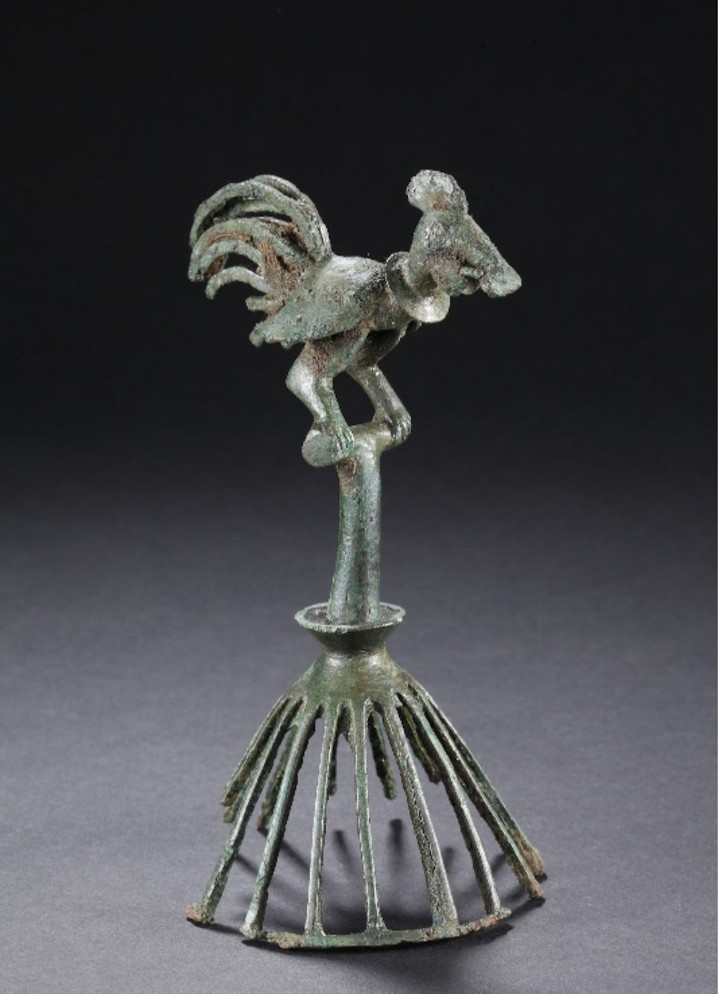
Bronze rooster
Caption:
This bronze sculpture, discovered at the Ban Don Ta Phet archaeological site in Kanchanaburi Province, Thailand, dates to the late prehistoric period. The rooster is carefully rendered to include its characteristic features, including a prominent comb, long tail feathers, hackles and sharp spurs. It stands on a bronze post that fits precisely into a bronze enclosure that was discovered nearby during archaeological excavations, suggesting that the two objects originally formed part of a single composition.
The object demonstrates the advanced metalworking skills of the Ban Don Ta Phet community. Analysis of the bronze found that it contains between around 23 per cent and 28 per cent tin, which gives the metal a distinctive golden-silver appearance. The production of the sculpture required specialized knowledge of alloy composition, mould-making and metal casting, placing it among the community’s more technically accomplished objects.
The bronze rooster and enclosure were found alongside burial assemblages containing glass beads, carnelian, agate ornaments and silk fragments. Traces of hemp textile were found adhered to the rooster’s tail feathers, possibly originating from a burial wrapping or garments placed with the deceased. The presence of woven hemp textiles demonstrates the sophisticated use of natural fibres alongside metal technology during this period, while the variety of products in the assemblages indicates that the community had contact with other communities across long-distance exchange networks.
The form of the sculpture, the rooster, is evidence of the widespread presence of chickens in prehistoric Thailand. Chicken remains have been found at several Neolithic and Bronze Age sites, including Ban Chiang and Ban Non Wat, indicating that domesticated chickens were part of community life at the time. This bronze representation portrays that familiar animal in a carefully crafted object associated with burial and remembrance.
Together, the rooster sculpture and its burial context reveal how the chicken, an animal embedded in everyday life, also held an important place in rituals and spirituality and was part of a larger expression of identity and artisanship among prehistoric communities of mainland Southeast Asia.