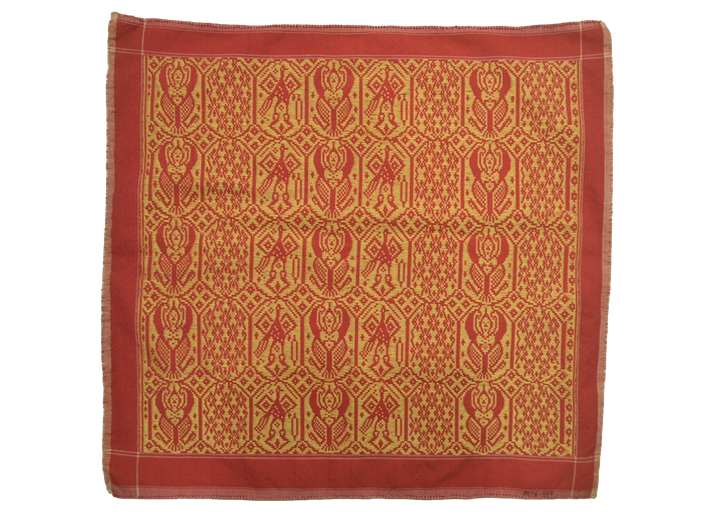
Cloth for Buddhist prostration, featuring Garuda and peacock motifs
Caption:
This ceremonial textile from Na Muen Si in Trang Province, Thailand, is a Buddhist prostration cloth woven with Garuda and peacock motifs using the intricate supplementary weft (yok dok) technique. During Buddhist ceremonies, such textiles are placed on the floor where devotees kneel to prostrate before Buddha images and statues or senior monks.
Created by master weaver Mrs Plek Nuiphol, this cloth features raised golden-yellow patterns against a deep red background, a colour combination traditionally reserved for important ritual textiles in southern Thailand.
The textile’s significance lies not only in its artisanship but also in the animals woven into its surface. In Hindu-Buddhist traditions in Southeast Asia, the Garuda (khrut), a mythical creature that is half human and half bird, represents divine protection, strength and the defence of Buddhist teachings. In Buddhist stories, the peacock (nok yung) is associated with overcoming desire, spiritual discipline and cultivating wisdom and symbolises beauty and purity. Its ability to remain radiant despite consuming poisonous plants made it a symbol for transforming worldly difficulties into spiritual strength.
Together, the Garuda and peacock create a powerful ritual pairing. The Garuda offers protection, while the peacock embodies inner purity and moral cultivation. Their presence on a prostration cloth reflects the devotee’s spiritual journey: approaching the sacred space under protection while seeking purification and enlightenment.
The Na Muen Si weaving tradition evolved as a communal art form centred on life rituals. Textiles featuring Garuda and peacock motifs were woven as ceremonial fabric for weddings, ordinations and funerals. In funerals they served to cover coffins. In this context, the Garuda and peacock were understood as celestial beings capable of guiding the deceased towards the afterlife and served as spiritual companions whose qualities helped connect human life with the divine realm.