Wangpar
Caption:
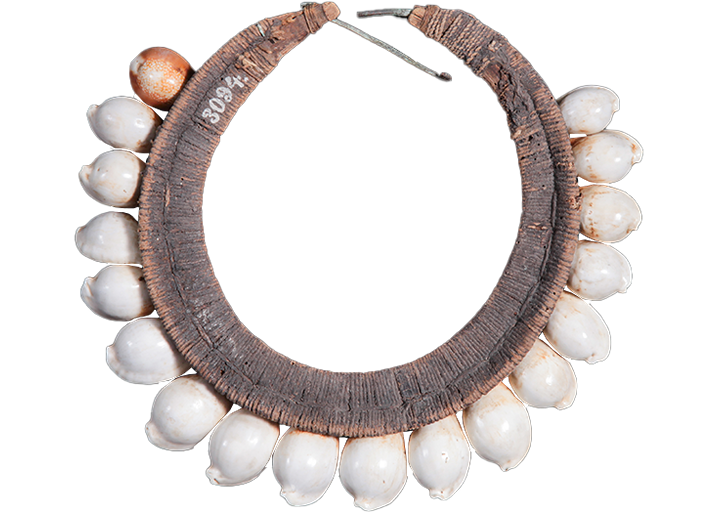
The Tanimbar Islands of Maluku have long been shaped by maritime life, and seashells are an important part of their communities’ material cultures. This traditional necklace, made from strands of cowrie shells attached to a frame, was historically worn together with earrings and a woven headcloth by Tanimbar men, particularly customary elders and warriors.
Cowrie shells were a valuable means of exchange in Maluku. Such necklaces required a large number of matched cowrie shells, so they were expensive to produce and were reserved for village leaders and warriors. Beyond their decorative function, such necklaces therefore signified strength, courage, wealth and social status.
As the shells were derived from the ocean, considered a sacred space inhabited by the souls of ancestors, cowrie shells were perceived as a physical representation of that realm. Wearing this cowrie necklace therefore also signified enduring connections with ancestors.
Through objects such as this, cowrie shells served as visual language through which Tanimbar communities expressed identity, authority and belonging.