Lawi ayam
Caption:
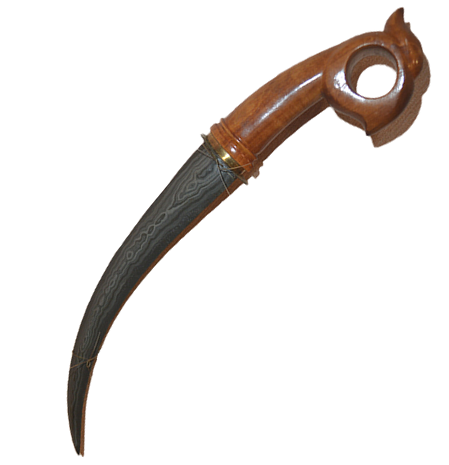
A lawi ayam (translated as the tail feather of a mature rooster) is a traditional close-quarters dagger. The weapon was named for the blade's curved, slender profile, which resembles the sweep of a rooster's tail feather. This example comes from the Patani School of Bladesmithing (Sakon Chang Pattani), one of the most historically significant centres for weapon production in southern Thailand.
The rooster shape gave the weapon meanings beyond its practical function. Across Malay and southern Thai communities, the rooster was associated with courage, vigilance and fighting spirit. As the bird that announces dawn and drives away darkness, it was understood as a symbol of alertness and protection. By shaping the weapon in the form of the rooster’s tail feather, the qualities of the animal were connected with those expected of the bearer: bravery, agility and resilience.
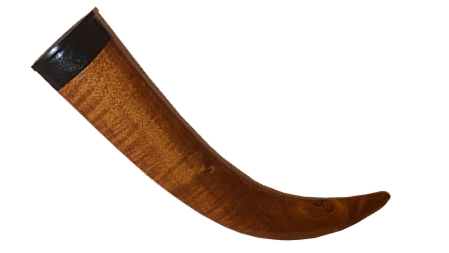
The weapon demonstrates the high level of artisanship associated with Patani bladesmithing. Its hilt is carved from mai kaeo dee pli (orange jessamine), a prized local hardwood, and is fitted with a brass ferrule and protective finger guard. The blade was forged through pattern-welding, layering iron and carbon steel through repeated folding and hammering to create the patterned surface known as lai mai phok, a regional expression of the Pamor tradition found across Malay and Indonesian blades. Its sheath is made from hill neem wood with an ebony inlay, both with auspicious associations.
The lawi ayam was once worn widely across Pattani, Songkhla, Phatthalung and Trang in Thailand and in the northern Malay sultanates. Its compact size allowed it to be worn discreetly within a sarong or waist belt, ready for immediate use. According to Malay martial texts such as the Kitab Silat, the dagger’s inward-curving blade was well suited for hooking and controlling an opponent’s movements, reflecting a close-combat fighting style built around speed, precision and adaptability.
The lawi ayam reflects a shared martial and symbolic tradition that developed across southern Thailand and the Malay Peninsula. Its form preserves both the technical knowledge of Patani bladesmiths and a wider regional understanding of the rooster as a symbol of strength and protection.