Liturgical pulpit covers
Caption:
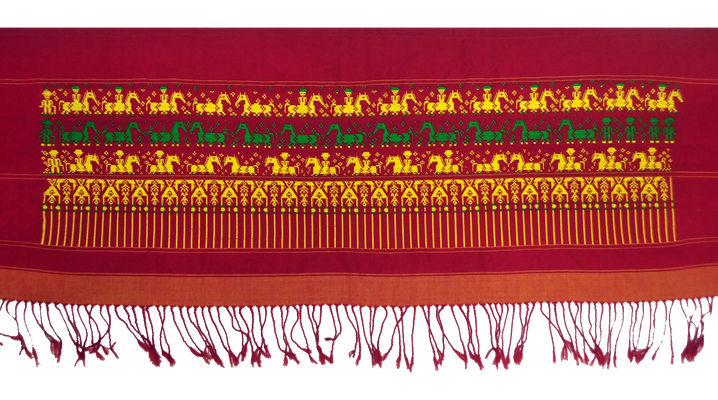
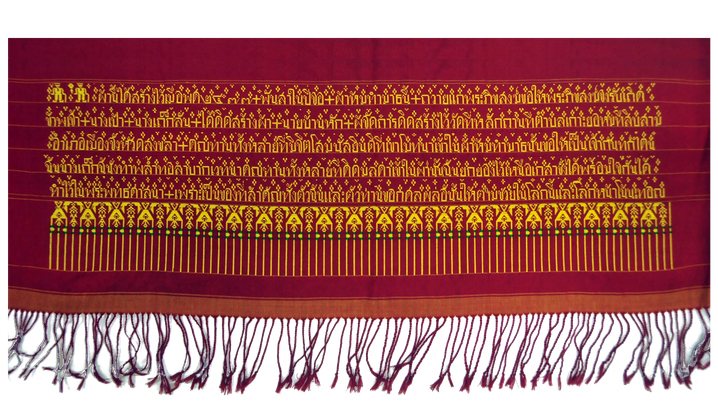
This is a liturgical pulpit cover (pha hum thammasan) from the temple of Wat Thai Yo in Songkhla Province, Thailand. Hung around the pulpit (thammasan), the cloth transforms the space of the sermon into a sacred setting for the transmission of the Dhamma.
Creating and donating such textiles are considered acts of merit-making (bun), with laywomen dedicating their labour, skill and devotion to supporting the Buddhist community. Originally made in 1934 as an offering to the temple, it was woven in saffron yellow, emerald green and charcoal black against a deep red background using the intricate yok dok (supplementary weft) technique, creating raised patterns.
Among the designs depicted on the cloth are two powerful animal forms: the Garuda (krut) and sacred steeds (ma). Both are depicted as celestial vehicles associated with movement between earthly and higher realms. The Garuda, which in Hindu-Buddhist traditions is the divine mount of Vishnu, carries associations of power, protection and heavenly authority. The horse, long associated across Southeast Asia with nobility, strength and martial ability, similarly represents a vehicle of elevation and prestige. Together, these animals frame Buddhist devotion through images of ascent, guardianship and spiritual aspiration.
The colours of the textile highlight the community's use of local natural resources. The dyes include red from the iron-rich earthen clays of Koh Yo's hillsides, yellow from jackfruit heartwood and black from fermented ebony berries. These colours were traditionally reserved for ritual objects across the region, symbolizing spiritual protection, dynastic prosperity and cosmic blessing.
This textile not only serves spiritual purposes but is also a record of collective devotion. Using the yok dok technique, weavers incorporated the names of the women who sponsored and produced the cloth directly into its structure.
This pha hum thammasan demonstrates how animal imagery travelled across South and Southeast Asian religious traditions while acquiring local meanings through community actions. In this textile, the Garuda and horse represent sacred vehicles woven into an offering through which the community expressed faith, identity and its relationship with the Buddhist cosmos.