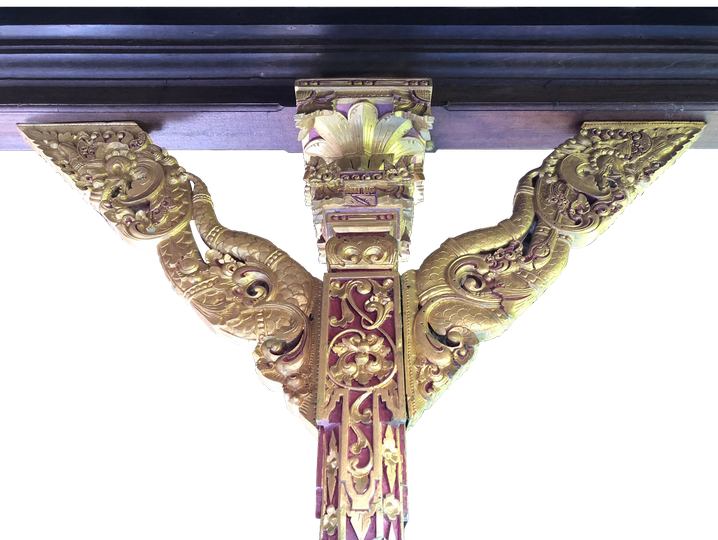
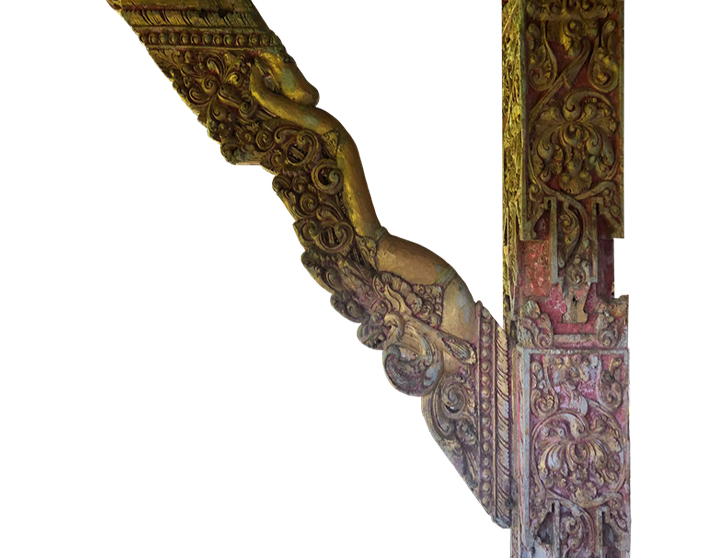
Balinese Naga-shaped corbels
Caption:
These elaborate Naga-shaped corbels at the Ada Guna Museum in Bali feature alongside figures of Garuda and singha (lion), serving as striking structural and decorative elements that reflect the museum’s dedication to preserving architectural collections and traditional artisanship.
In Balinese culture, the mythical serpent known as the Naga marks the threshold between the profane outer world and the sacred inner sanctuary and is a vital guardian. While rooted in Indian and Southeast Asian traditions, the Balinese Naga is uniquely localized and has been woven into the island’s architectural, spiritual and artistic identity. Balinese mythology perceives the serpent as a emblem of balance and community guardianship. This reflects a synthesis with pre-Hindu animism – a heritage preserved in villages where offerings continue to be given to sacred trees and rivers today.
Guided by traditional master builders (undagi), artisans create structures in the form of serpents to anchor temple staircases, foundations and royal baths. At water temples like Tirta Empul and Goa Gajah, serpentine sculptures guard waterspouts and gates, channelling tirtha (holy water) to safeguard both the physical purity of water and to serve in the metaphysical purification of the soul.
During religious observances such as Odalan (temple anniversaries) and Melasti (ocean purification), Naga effigies are paraded to the sea to cleanse the community and bridge the seen world (sekala) with the unseen spiritual realm (niskala).
Today, the Naga remains a central symbol across shadow puppetry (Wayang Kulit), performing arts and ceremonial regalia. Even amidst modern tourism, the watchful Naga stands as a timeless sentinel of Bali’s living spiritual foundations.