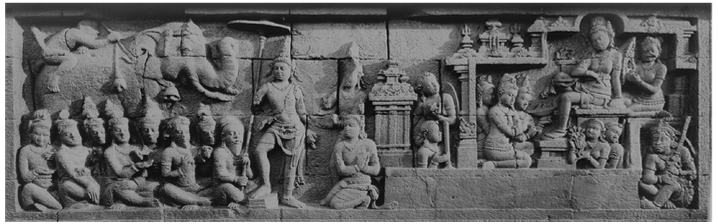
Bas-relief of a procession, illustrating the life of the Buddha
Caption:
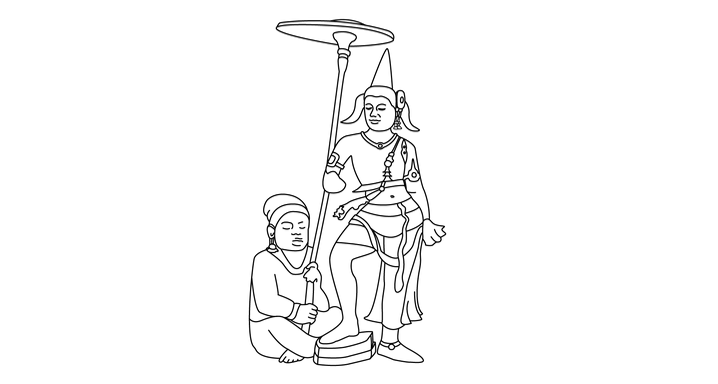
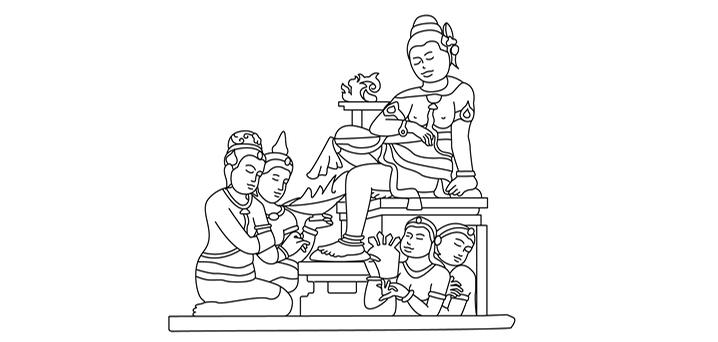
This relief forms part of the narrative cycle illustrating the life of the historical Buddha (Lalitavistara) carved along the first gallery of Borobudur. It depicts a royal or aristocratic procession, reflecting both Buddhist narrative traditions and the courtly life of eighth- and ninth-century Java. Inspired by Buddhist texts, the artists represented architecture, clothing, vehicles, ornaments, and ceremonial practices familiar to the Javanese world, making the relief an invaluable record of early Southeast Asian society as well as Buddhist visual culture. The panel remains in its original location within Borobudur, one of the world's largest Buddhist monuments, commissioned under the Sailendra dynasty in the late eighth and early ninth centuries.
Throughout history, elephants have been deeply intertwined with the lives of Southeast Asian communities, both symbolically and practically. They served as transport in warfare, where elephant duelling (Yuttahatthi) between opposing kings was regarded as the highest form of martial honour, and facilitated the movement of goods along trade routes through forests and mountainous terrain. This relief bears witness to the enduring presence of elephants in the region from an early period. While it depicts a Bodhisattva riding an elephant in eighth-century Java, by the nineteenth century elephants had also become the primary workforce of the logging industry in northern Thailand.