Bencha
Caption:
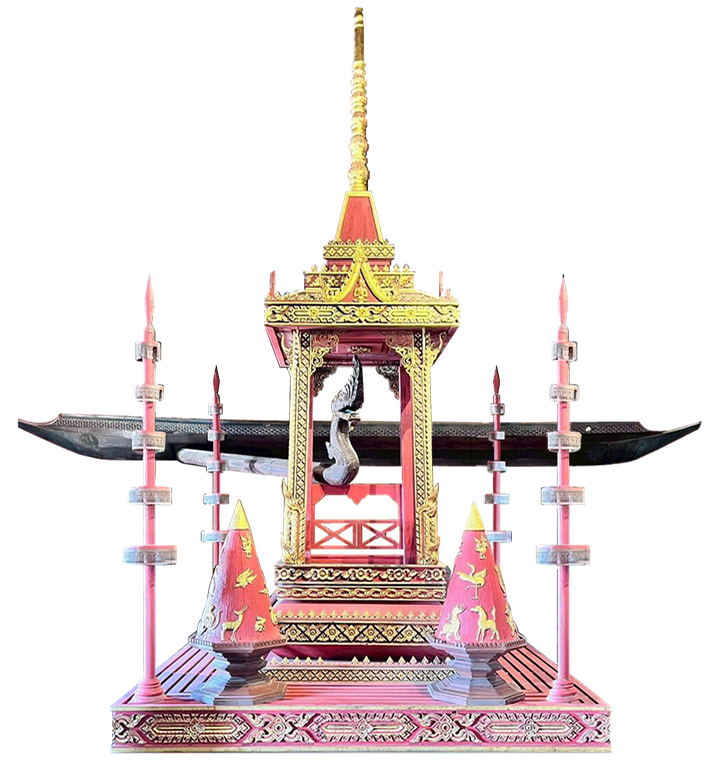
A bencha is a small, tiered pavilion – a form of temporary architecture – used during the Songkran festival for bathing Buddha images and pouring water over the elderly. Songkran marks the end of the dry season, a period of new beginnings. The bencha is distinguished by its stacked roof, intricate kanok patterns (a flame-like or stylised leaf design) and gold-leaf lacquer.
A key feature is the Naga-shaped water flume, which symbolises the Great Serpent spouting water as an offering to the Buddha and a prayer for abundance. Pouring water through this flume allows devotees to show respect without direct physical contact.
The Naga's image here is significant: as a creature whose nature is bound to water, it is a fitting vessel through which blessing flows – linking the mythological power of the serpent to the communal act of renewal.
This tradition functions as a social glue, fostering unity through the collective construction of the pavilion, while reflecting gratitude toward elders and the belief that the power of water brings prosperity to the community.