Chanap
Caption:
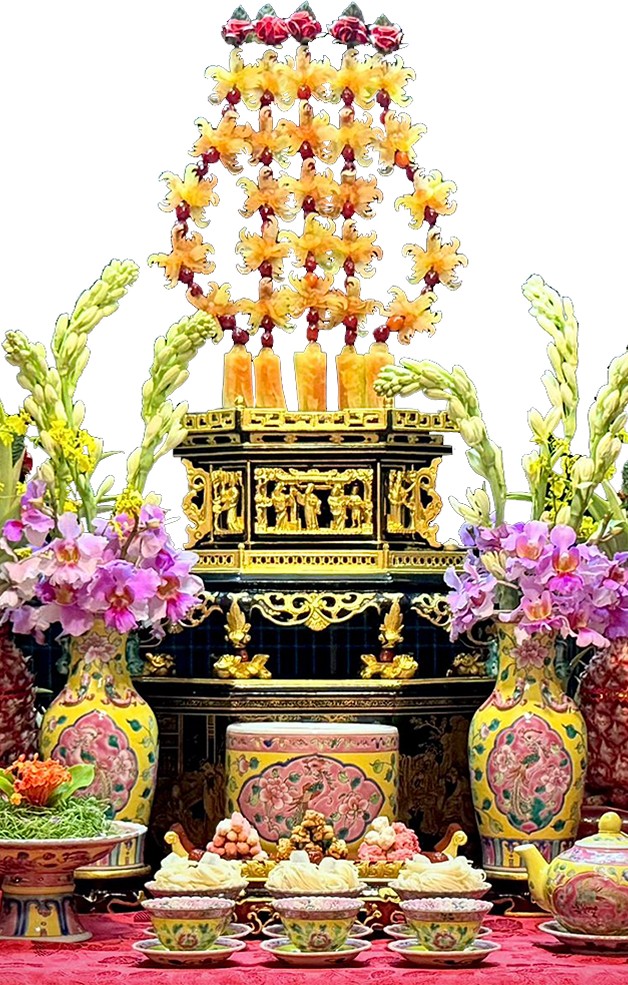
A chanap is a ritual offering used in prayers within Peranakan Chinese households. It is formed by carving preserved half-ripe papaya into intricate shapes such as crabs and flowers. After being carved, chanap are then placed in decorative boxes and are offered at major rituals and life events, including Lunar New Year, prayers to the Jade Emperor (Pai Thi Kong), weddings and funerals. Often the most visually striking object on the altar, it forms the centre of the offering display.
Chanap are traditionally carved into the form of a crab, as the Chinese word for crab (xie) sounds like ‘harmony’, making the creature an auspicious symbol within the offering. Through the form of the crab, the chanap brings together the linguistic symbolism of Chinese tradition with the associations attached to natural resources of the region. It combines wishes for harmony and prosperity into a sacred offering.
The term chanap is used by the Peranakan Chinese of Malacca and Singapore. Similar offerings in Penang, Phuket and Indonesia are known as bit chien or cien nap/hap, names that may derive from the Hokkien term chien hap, meaning ‘sweet-preserves box’. The presence of closely related ritual forms across these port communities reflects the movement of Peranakan Chinese traditions through the maritime networks of Southeast Asia. Here shared practices developed alongside long histories of migration, trade and settlement.