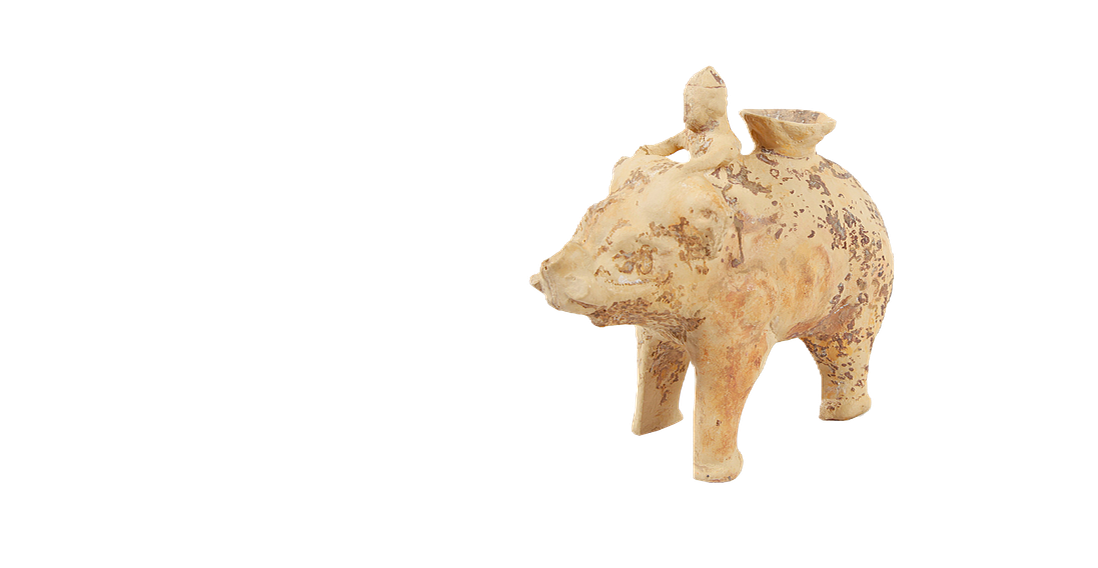
Elephant and Mahout Kendi
Caption:
This brown-glazed stoneware vessel (kendi), shaped as an elephant with its rider (mahout), was crafted at the Si Satchanalai kilns in central Thailand. Historically, kendi were used across South-East Asia as pouring and drinking vessels, including in rituals and ceremonies such as weddings. Recovered in 1998 from a shipwreck off the coast of Brunei Darussalam, this striking object reflects the interconnections between communities across maritime South-East Asia.
The form of the kendi mirrors the elephant’s own act of drawing and pouring water through its trunk, creating a direct connection between the vessel’s function and its imagery. In this way, the kendi does not merely depict the elephant but evokes its presence through both form and use.
Elephants are powerful cultural symbols associated with wisdom, strength and loyalty in Hindu-Buddhist traditions. By shaping this vessel in the form of an elephant, the makers of the kendi drew upon these associations, connecting the act of pouring with the auspicious qualities attributed to the animal.
These associations were spread across the region through storytelling, rituals and trade. As the elephant symbol was transferred across the seas, it became part of the cultural networks that linked communities in Brunei and Thailand with communities across South-East Asia. Its journey reveals how heritage was shared not only through religious sites and royal courts, but also through everyday objects that moved with people, beliefs and ideas across the maritime world.