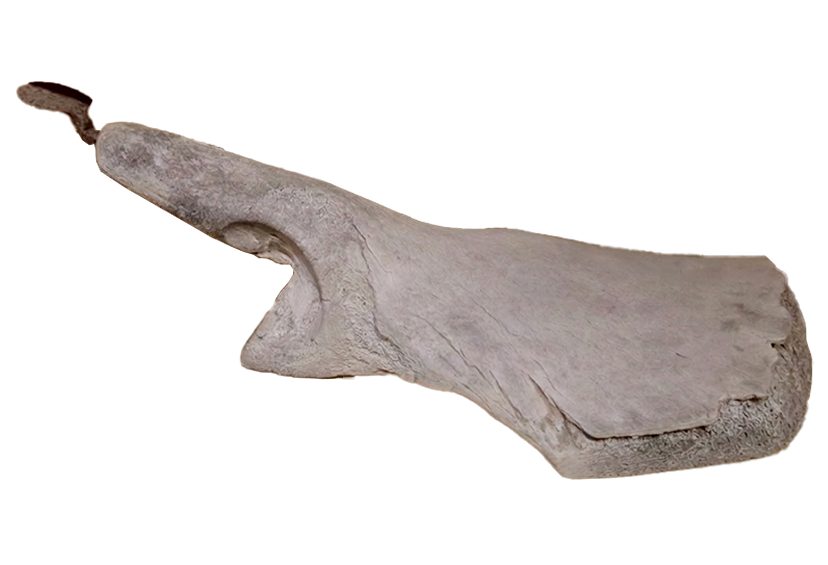
Elephant molar coconut grater
Caption:
This coconut grater (lek khud maphrao) is distinguished by its base, which is fashioned from a large molar of a megafaunal animal. Attached to the front is a serrated iron blade used to shred coconut meat into fine flakes for pressing coconut milk.
The coconut grater is an essential household tool in southern Thailand, as coconuts are central to the local cuisine. The tool is also an important part of traditional culture. During preparations for merit-making ceremonies, festivals and weddings, villagers historically gathered to share the labour of grating coconuts in the tradition known as ok pak khud phrao (asking for mouths to grate coconuts).
Elephant molars are among the densest and hardest skeletal structures in the animal kingdom, making them well suited to withstanding repeated pressure and impact. The use of this material to make a coconut grater reflects local knowledge of durable natural resources for use in everyday life.
In addition, elephant molars have long been regarded in Thai society as auspicious protective amulets, believed to bestow metta mahaniyom (loving-kindness and popularity) and ward off misfortune.
Elders around the Songkhla Lake Basin believe this molar belonged to the ‘dwarf elephant’ (chang khrae or chang khom), which is said to have once inhabited the peat swamps and wetlands of southern Thailand. Folk memory places these elephants across Songkhla Province, Nakhon Si Thammarat and Phatthalung Province before they vanished in the mid-twentieth century. Some accounts tell of villagers spotting elephants foraging in the twilight hours or slipping into paddy fields to feed. These sightings prompted the community to band together with a common herding cry to drive them back into the forest. Certain villagers compared these creatures to the pygmy elephants of Sabah in Malaysia. Though scientific evidence remains inconclusive, these oral histories and folklore preserve a community’s memory of its landscape and its long relationship with elephants.
The idea of miniature elephants also appears in classical Thai treatises on elephant lore (Kotchasat) and ancient southern palm-leaf manuscripts (Nangshue Bod), which document unusual elephant phenotypes under names such as chang klaeb (husk-sized elephants) and chang khom (stunted elephants).
This coconut grater demonstrates how material culture, in which a molar attributed to the dwarf elephants of local folk memory was used to make a tool for daily use, preserves memories of human relationships with elephants and the landscapes they once shared.