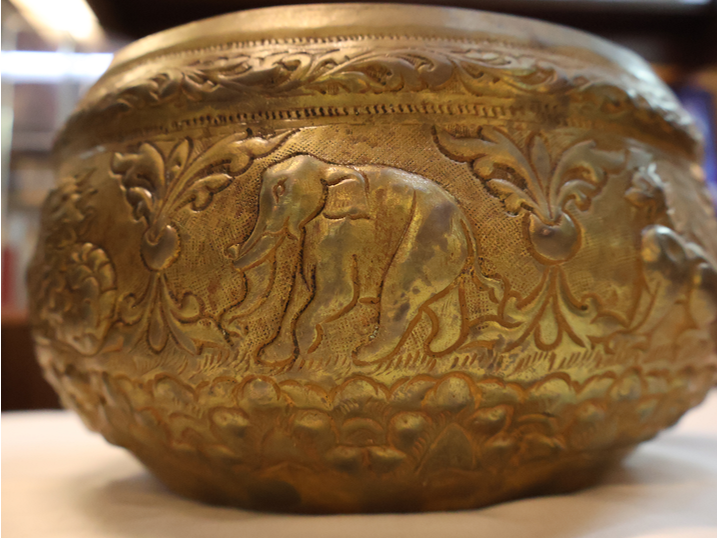
Embossed brass basin with mythical animal motifs
Caption:
This repoussé and chased brass basin (khan nam mon) was designed to hold consecrated holy water (nam phra phuttha mon) for protective chanting assemblies, ordinations, weddings, monastic bathing rites and housewarming blessings. Within such settings, the water serves as a conductor of collective faith and divine blessings, and, in the context of southern Thai society, which was shaped by riverine ecosystems, as a sanctified symbol of purity, seasonal abundance and communal nourishment.
The basin features a structured layout of auspicious animals embossed around its body, including the elephant (chang), the tiger (suea), the Naga (phaya nak), the Rajasiha (Ratchasiha, the mythical lion), the Garuda (Khrut) and the bear (mee). Each carries symbolic weight rooted in regional folklore and cosmological thought: the elephant represents physical strength, institutional stability and agricultural fertility; the Naga expresses water, rainmaking and subterranean abundance; the Rajasiha signifies sovereign command and divine protection; and the Garuda denotes supreme authority and power over evil spirits. Consolidating this specific pantheon of beasts onto a single vessel reflects an ancient ideological pursuit: channelling the balancing forces of nature to manifest comprehensive good fortune. In folk theology, these animal motifs are linked to the concept of guardian spirits (sat phu phitak) and arranging such a diverse assembly around the basin acts as a metaphor for summoning spiritual energies from all directional axes into the ritual space.
The vessel was hand-shaped from a single sheet of brass and embellished using the repoussé technique (dun lai noon tam), in which the metalsmith works from the reverse side, hammering the metal outward to create raised, three-dimensional designs, before flipping the vessel over to execute precision chasing from the front – a craft demanding intimate mastery of metallurgy and intense concentration. Due to the highly intricate, labour-intensive and costly production process, such basins were exclusively commissioned for prominent temples or held by community leaders and wealthy members of society.
Basins such as this exemplify southern Thai metal artistry. They were historically produced in the major coastal principalities (hua mueang) of southern Thailand – most notably Nakhon Si Thammarat and Songkhla – metallurgical hubs linked with maritime trading networks that fostered cultural exchange between Thai, Malay and Chinese communities.
The animals depicted on this basin – the elephant, Naga, Garuda and mythical lion – represent a shared symbolic vocabulary that circulated across maritime South-East Asia over centuries. Through the metalworking techniques that encapsulated these regional beliefs into the form of a single crafted object, the basin reveals how knowledge, materials and animal-inspired meanings travelled along maritime networks with the communities that shaped the region’s shared heritage.