Ganesha
Caption:
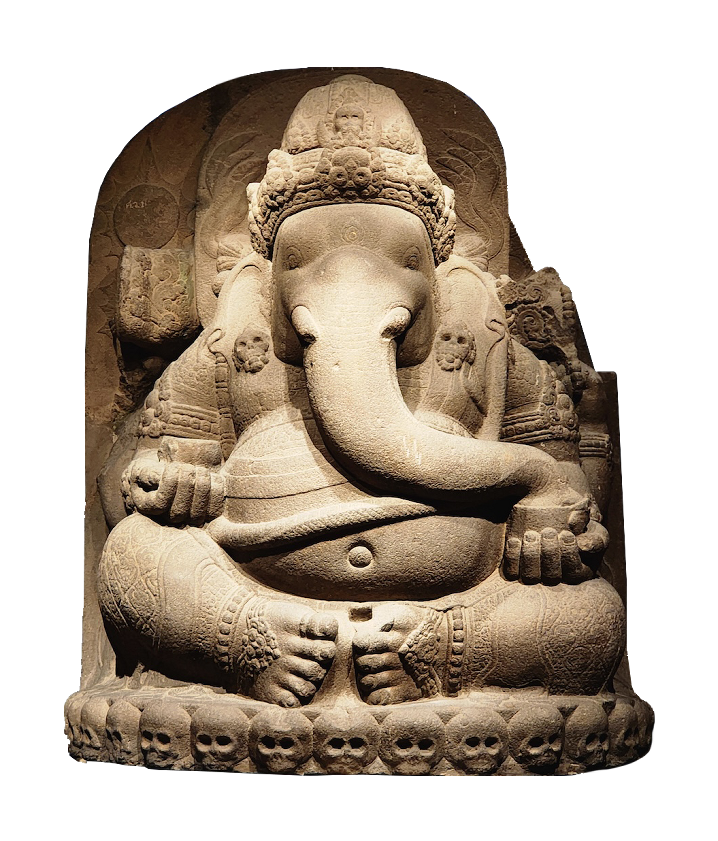
Carved from volcanic stone, this statue depicts Ganesha, the elephant-headed deity associated with wisdom, learning and the removal of obstacles. Ganesha's rounded body symbolizes the fullness of the harvest and prosperity.
According to Hindu tradition, Ganesha acquired his elephant head after Shiva restored him to life using the head of the first living creature encountered by his attendants. As the deity invoked at the beginning of new undertakings, he also embodied good fortune and successful beginnings.
The elephant motif reflects meanings derived from the animal itself. Across South and South-East Asia, elephants were admired for their strength and intelligence, and they were associated with water and agricultural fertility. In Hindu tradition, such qualities were expressed through Airavata, the celestial elephant of Indra, whose association with rain and abundance reflects the importance of elephants within agrarian societies.
Beneath this Ganesha statue appears his companion, the mouse. Although small, it represents the obstacles, desires and disruptions that can hinder human life. By placing the mouse beneath him, Ganesha demonstrates his mastery over these forces, reinforcing his role as the remover of obstacles.
This sculpture reflects how communities across South-East Asia interpreted the elephant in various ways in religious and artistic practice. In the figure of Ganesha, one of the region's most familiar animals became a powerful expression of wisdom, protection, prosperity and renewal.