Kalakati
Caption:
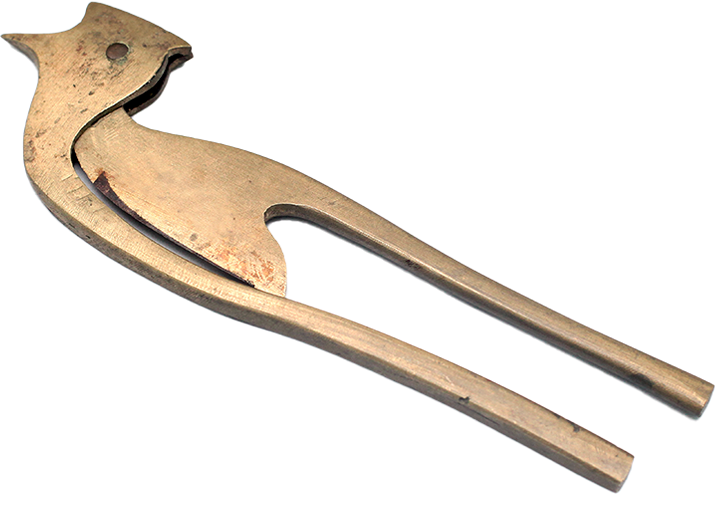
This copper kalakati (betel cutter) from Brunei Darussalam is in the shape of a bird. Traditionally used to cut betel nut (pinang) and local fruits, such tools were once an important part of the material culture of hospitality and daily social exchange in the region. Today, this example is valued primarily as a decorative object and for its traditional artisanship.
The bird represented in this betel cutter carries meanings beyond decoration. In traditional Bruneian Malay society, the behaviour of birds such as egrets, herons, mynas, fantails, swallows and tailorbirds around paddy fields and waterways was observed as part of agricultural life, as it helped communities interpret seasonal changes, including when to begin or delay farming activities. Birds were familiar companions within these landscapes, their movements forming part of local ecological knowledge.
The species of bird represented in this artefact would have been immediately recognizable to the users of this cutter as a familiar presence from Brunei’s fields and waterways. The bird connects the object to the attributes associated with birds and the natural world from which communities drew their understanding of time, season and place.
Here, the bird that guided agricultural rhythms became the bird that adorned a prestigious possession, showing how animals in Southeast Asian societies were valued for their contributions to everyday life and the symbolic language of prestige and identity.
Incorporating the bird motif as a crafted element for an object associated with hospitality, refinement and social interaction elevates this functional tool into a marker of culture and identity. The bird shape of the kalakati also reflects the movement and exchange of ideas and artistic traditions across the communities of maritime Southeast Asia.