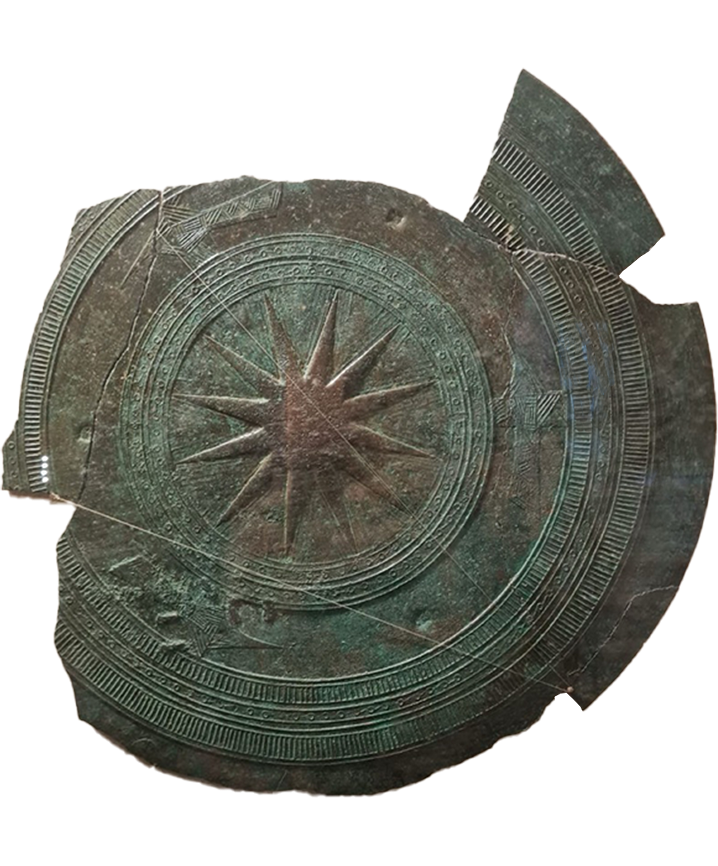
Đông Sơn drum
Caption:
This bronze drum is a style of drum that was common during the bronze age of Thailand, and is related to the Đông Sơn culture, a metal age culture of Viet Nam dating back approximately 2,700 years. Such drums were often used in ceremonial contexts, including at burials and in ritual spaces. Possessing and using such drums expressed the authority of community leaders who mediated relationships between people, ancestors and the natural world. The sounds of these drums were believed to summon rain, encourage agricultural fertility, protect communities and bring people together for ancestral ceremonies.
Created through the lost-wax casting method, such drums are objects of considerable technical skill The drumhead of the Đông Sơn drum is decorated with a twelve-pointed star, geometric patterns arranged within concentric circles and a counter-clockwise flying bird motif of a kind of egret – a waterbird whose natural domain spans both the sky above and the water below – making it a fitting presence on an instrument believed to call rain from one into the other. A pair of cast-in ears are attached to the sides above the drum body.
The egret and other waterbirds were intimately connected to the seasonal rhythms of rain and were associated with water and agricultural abundance across early Southeast Asian communities. Depicted circling the starburst centre of the drum, the waterbird reflects a worldview in which creatures of the air and water participated in maintaining cosmic balance and agricultural prosperity. The presence of this type of bronze drum in southern Thailand also points to a wider regional connection. Through networks linking communities across mainland Southeast Asia, metalworking techniques and shared understandings of the natural and spiritual worlds travelled together.