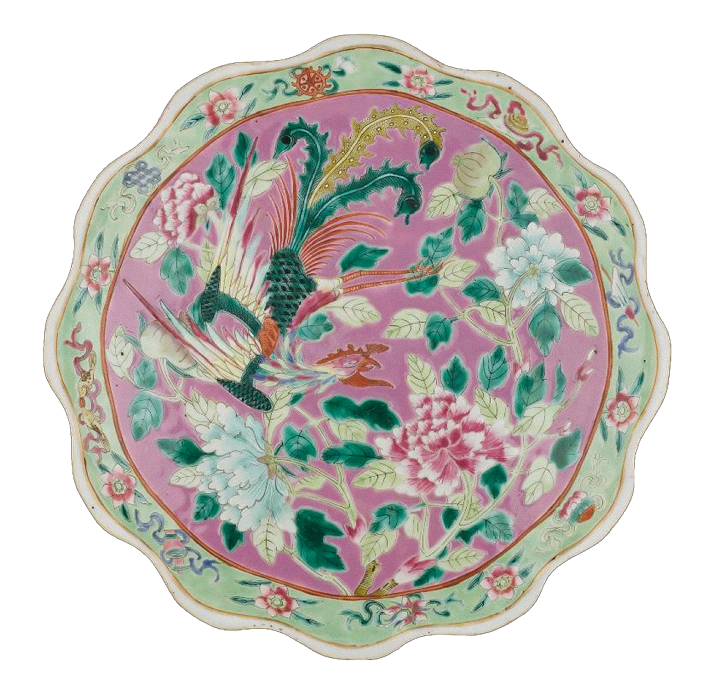
Offering dish
Caption:
This porcelain offering dish was made for ceremonial use. Its thickly potted body, twelve-lobed fluted rim and richly decorated surface reflect the importance placed on vessels used in acts of devotion. The dish is painted with phoenixes among peonies. On ritual vessels such as this, the phoenix carried wishes for harmony between the human and spiritual worlds. The rim features the Eight Auspicious Symbols – Buddhist emblems associated with blessings, protection and spiritual well-being.
In Chinese tradition, the phoenix (fenghuang) is an auspicious creature associated with grace, virtue, harmony and high status. It is a composite being with the features of several animals – the neck of a snake, a swallow's breast, a tortoise's back and a fish's tail – embodying the perfection of many qualities. Its five-coloured plumage and harmonious song reflect cosmic balance, while its association with the empress positions it as a symbol of feminine virtue and authority.
The accompanying peony, a flower associated with honour, prosperity and beauty, reinforces these auspicious meanings. During the late Qing period, altar vessels decorated with such imagery were used in ancestral and religious ceremonies where offerings of food were presented as acts of remembrance and devotion.
When placed on objects used to honour ancestors and the sacred, the phoenix, a creature of cosmological significance, became part of ritual practice through which communities across Southeast Asia express hopes for harmony, continuity and divine blessing.