Perminaken
Caption:
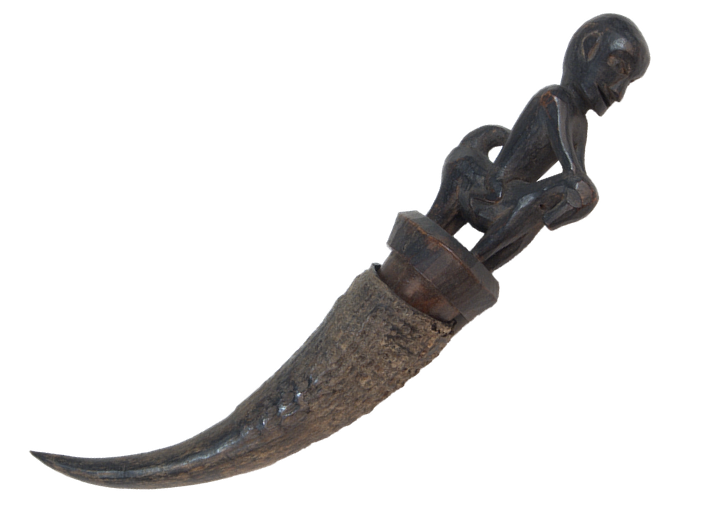
Known among the Batak peoples of northern Sumatra as a buli-buli, this medicine horn (perminaken, from minak, meaning “medicine”) was carved from the hollow horn of a Sumatran serow (a goat-antelope). It was used by a datu (ritual specialist) to store ritually potent substances prepared from roots, leaves, bark, animal materials and other ingredients. These medicines were believed to protect, heal or, when required, harm. Carried from the shoulder or on a belt, the horn kept these substances close at hand during ritual practice.
The carved figure seated on the stopper may represent a predecessor in a lineage of ritual specialists or a mythical figure found on other Batak ritual objects. Similar carvings also appear on megalithic sculptures from northern Sumatra, linking this vessel to wider artistic and ceremonial traditions.
Across the Batak communities of northern Sumatra, spiritual authority rested with the datu, whose specialized knowledge of ritual and medicine complemented the civic authority of local leaders. A buli-buli was therefore both a practical container and an emblem of ritual expertise.