Tempayan
Caption:
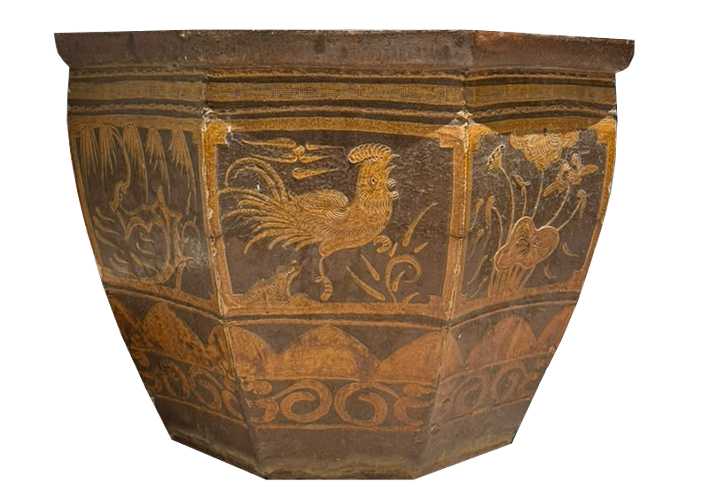
These large earthenware storage jars (tempayan), likely produced in southern China or Southeast Asia between the late eighteenth century and early twentieth century, were once common household items in Peranakan Chinese homes across maritime Southeast Asia.
Crafted from high-fired clay, tempayan reflect shared domestic practices across the region. Larger jars were commonly used for water storage, while smaller ones held pickles, rice and other dry ingredients.
Everyday objects such as the tempayan featured hand-painted motifs, including birds, floral scrolls and bamboo, expressing cultural identity and aspirations. These motifs were chosen for their auspicious meanings, drawing from Chinese visual traditions in which certain plants and animals convey wishes for harmony, prosperity, longevity and abundance.
The birds painted on this jar, including chickens, belong to this tradition. The rooster, associated across Chinese and Southeast Asian communities with diligence, vitality and the arrival of dawn, brought these qualities into the sphere of everyday provisions and family life.
Placing such imagery on a vessel used for preserving the household’s necessities connected ordinary acts of storage and sustenance with broader hopes for prosperity and continuity. This tradition reflects how animal symbolism was woven into the material culture of everyday life across maritime Southeast Asia.