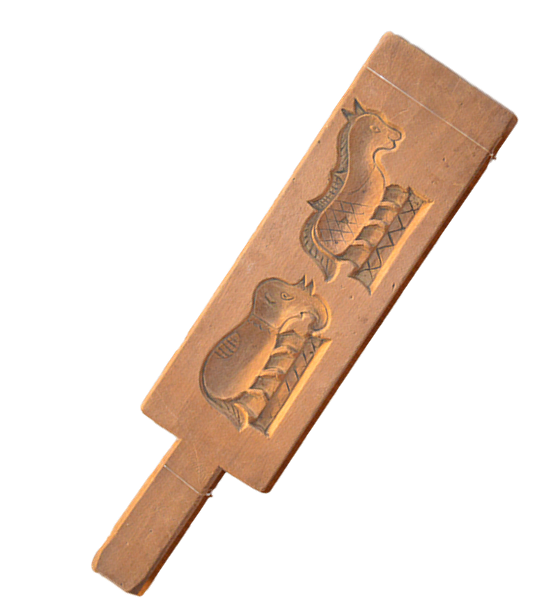
Wooden Cold-Press Cake Molds with Elephant, Horse, and Fowl Motifs
Caption:
This phim yen (literally "cold mold") is a wooden pastry mold used to make Khanom Putu, a traditional pastry. Such molds are carved from durable local hardwoods such as jackfruit or velvet tamarind wood, with hollow cavities roughly 1 to 2 inches deep chiselled into detailed, recessed designs. This collection contains motifs of elephants, horses, and poultry, traditionally popular for Khanom Putu. The "cold-press" method gives the mold its name: the dough is shaped entirely inside the wooden matrix without baking or heat, then extracted with a sharp tap against a wooden table, releasing the pastry with sharp, embossed reliefs.
This heritage pastry has held an essential position within the daily life, rites of passage, and religious rituals of both Chinese and Malay-Javanese communities in Southern Thailand for centuries. It is used at births, cradle ceremonies, engagements, weddings, and circumcision rituals. During Songkran, younger generations arrange these pastries inside fine betel nut caddies or lacquerware to offer to elders in exchange for ancestral blessings. Within the Sathing Phra Peninsula, this pastry holds a profound allegorical connection to matrimony: its name sounds identical to the Thai word meaning "to hold fast" or "to intertwine," making the cake an edible prayer for marital fidelity.
Carving specific fauna onto the phim yen allowed families to embed unspoken blessings directly into the food served to guests. The Elephant (Chang) denotes absolute authority, spiritual merit, and structural prosperity — pastries stamped with this form are reserved for grand auspicious celebrations or offered to high-ranking Buddhist monks and Muslim leaders. The Horse (Ma) represents rapid progress and career advancement, standardly served at housewarmings or gifted to young adults. The Chicken (Kai), which awakens at dawn to forage, signifies industriousness, material abundance, and financial luck and is served more widely.
The phim yen tradition illustrates trans-regional interactions. Diasporic Chinese Hokkien and Baba-Peranakan communities introduced the technology of hand-carved wooden blocks for compressed pastries. They substituted Chinese mythological creatures with animals familiar to local agrarian life and folk belief: the elephant, the horse, and the chicken. Meanwhile, Malay-Javanese and Islamic traditions contributed to the pastry’s recipe.
This mold, encoding Chinese technological knowledge, Malay culinary tradition, and the symbolic vocabularies of the elephant, the horse, and the chicken, speaks to a layered process of exchange, adaptation, and sharing that shaped the Southern Thai-Malay Peninsula over centuries.