




Skip to content

Garuda timeline

Section : Cosmology Religion & Spirituality
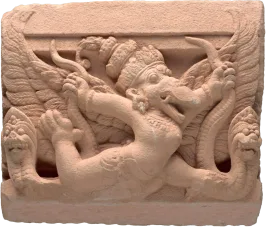
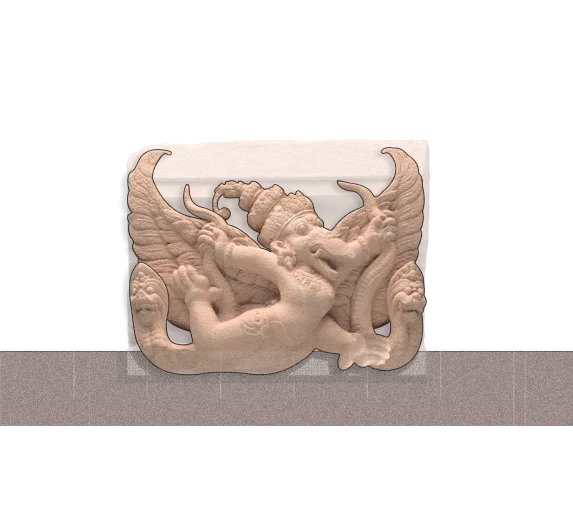
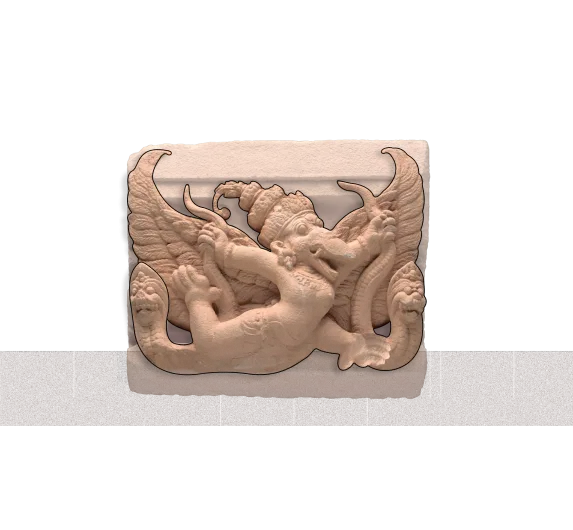
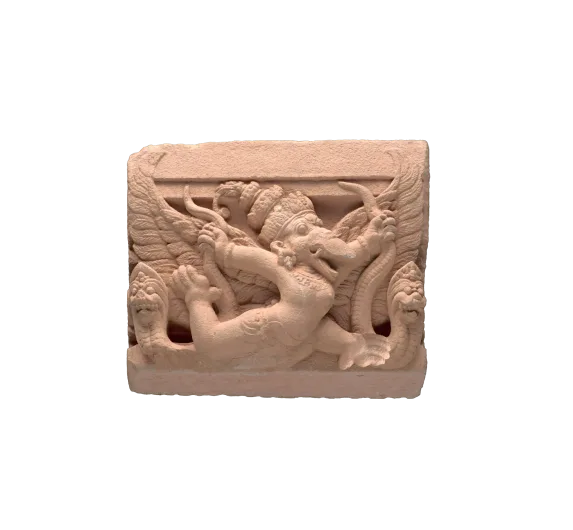
Period: 11th or 12th century
Place of Production / Findspot: Vietnam
Material: Sandstone
Dimension: Length 56 cm, Height 41 cm, Width 25 cm
Collection: Asian Civilisations Museum
Other Information / Object Biography: Accession No. 1994-00506

Section : Mythology & Folklore
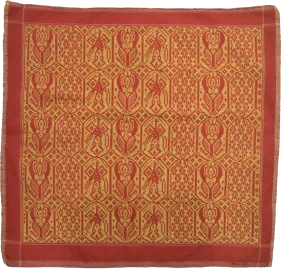
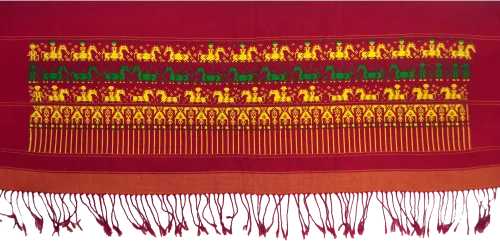
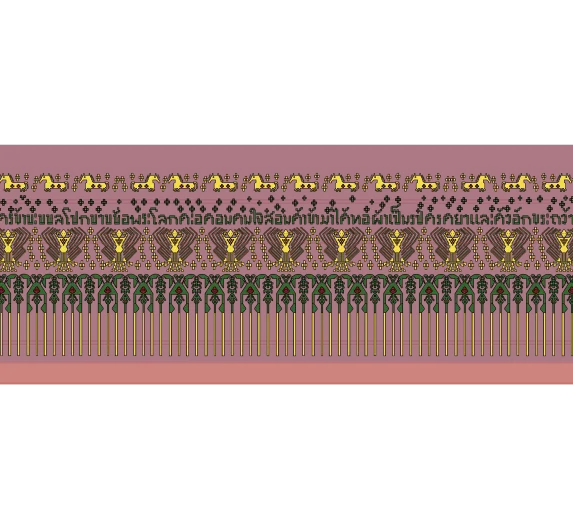
Material: Discontinuous supplementary weft patterned cotton (Pha Fai Tho Yok Dok)
Dimensions: Width 48 cm, Length 47 cm
Collection: Folklore Museum, The Institute for Southern Thai Studies
Other Information / Object Biography: Woven by Mrs. Plek Nuiphol. Exhibited in the Local Textile Exhibition Room (Hong Pha Tho Phuen Mueang), Folklore Museum, Institute of Southern Thai Studies.
Condition: Excellent / complete pristine condition (Saphap Sombun).

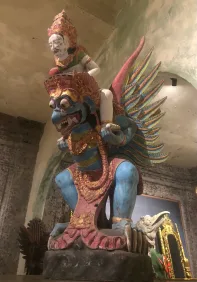
Collection: Ada Guna Museum

Section : Materials Science & Technology
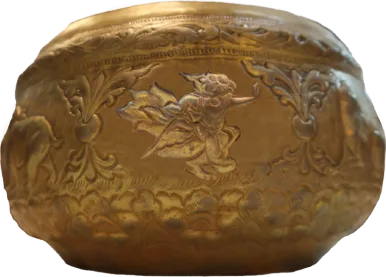
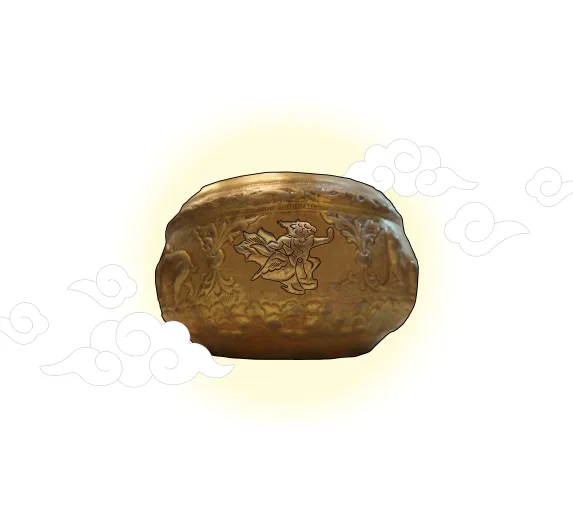
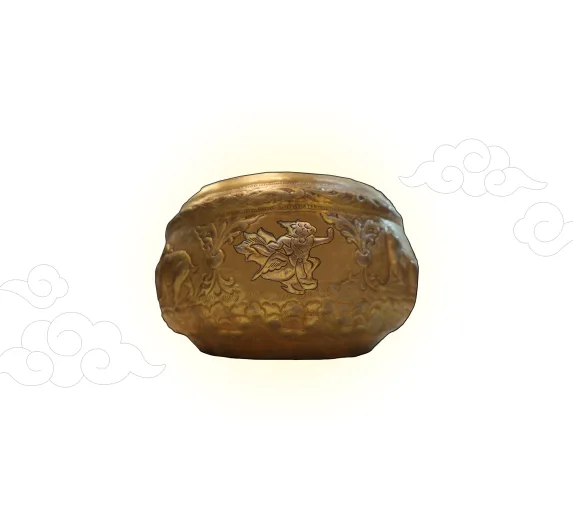
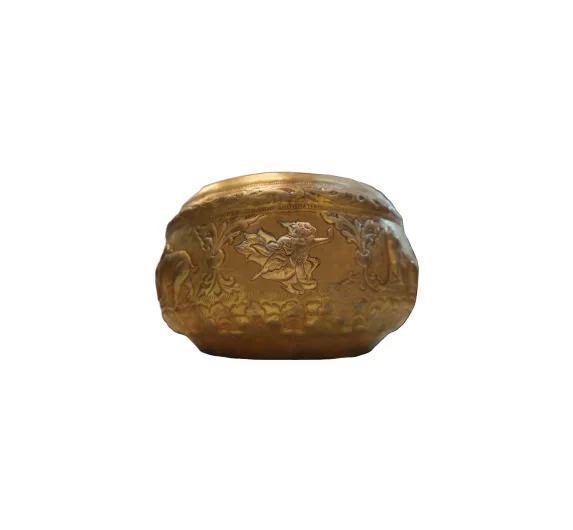
Material: Brass alloy
Dimensions: Rim Diameter: 19 cm, Base Diameter: 11.8 cm, Height: 14 cm
Collection: Folklore Museum, The Institute for Southern Thai Studies
Other Information / Object Biography: Contributed by Mr. Pracha and Mrs. Namthip Chantharadeeying. Exhibited in the Metalwork and Metallurgy Culture Room, Folklore Museum, Institute of Southern Thai Studies.

Section : Ceremonies Rituals & Festivals
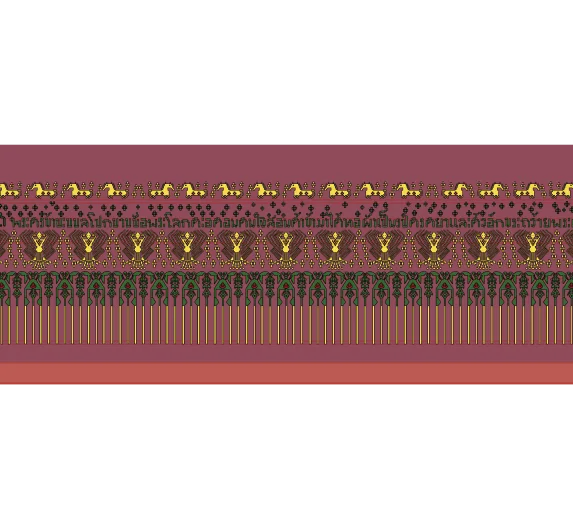
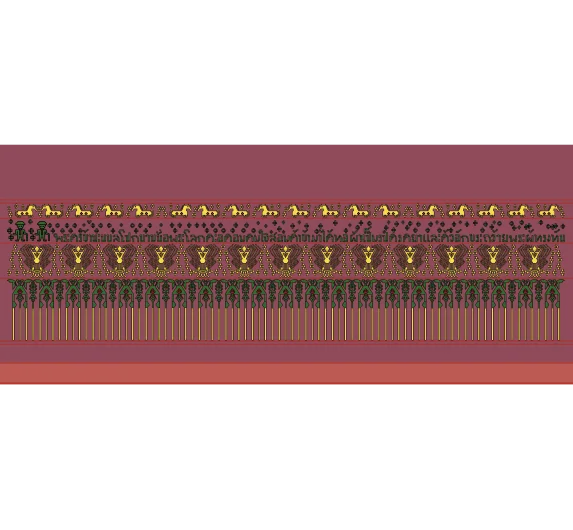
Local Name: Pha Hum Thammasan / ผ้าหุ้มธรรมมาสน (ผ้าทอเกาะยอ)
Material: Supplemented supplementary-weft (Yok Dok) handwoven cotton, embellished with antique Southern glass beads
Dimensions: Width 28 cm, Length 360 cm
Collection: Folklore Museum, The Institute for Southern Thai Studies
Other Information / Object Biography: Original Heirloom Piece: Transferred via ritual donation by Phra Athikan Prathom Pathamo, the late Abbot of Wat Thai Yo, from Village No. 8, Koh Yo Sub-district, Mueang Songkhla District, Songkhla Province. Accessioned into the permanent collection vaults of the Folklore Museum on 9 October 2014. Modern Replica Piece: Hand-loomed and donated by Ms. Ubolsri Attaphan, sourced from Mueang Songkhla District, Songkhla Province. Exhibited in the Local Textile Exhibition Room (Hong Pha Tho Pheurm Mueang), Folklore Museum, Institute of Southern Thai Studies.

Reflection

In the Hindu epic Ramayana, Garuda frees Rama and his brother from the serpent-arrows of their enemies. In Southeast Asia, where the relationship between birds and serpents was familiar, this story merged with regional traditions such as the Thai Ramakien, where Garuda likewise represents protection and victory over harmful forces.
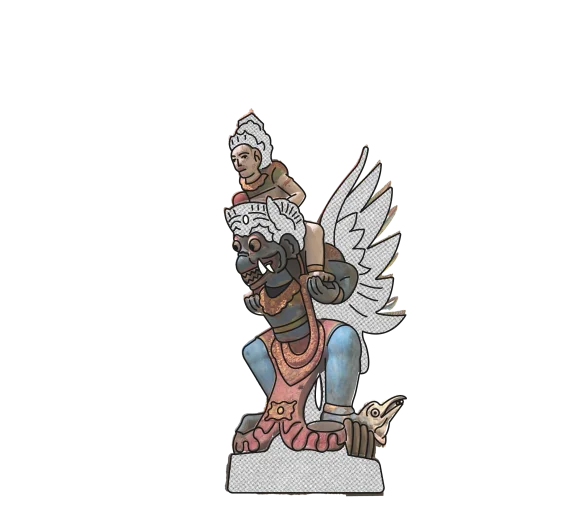
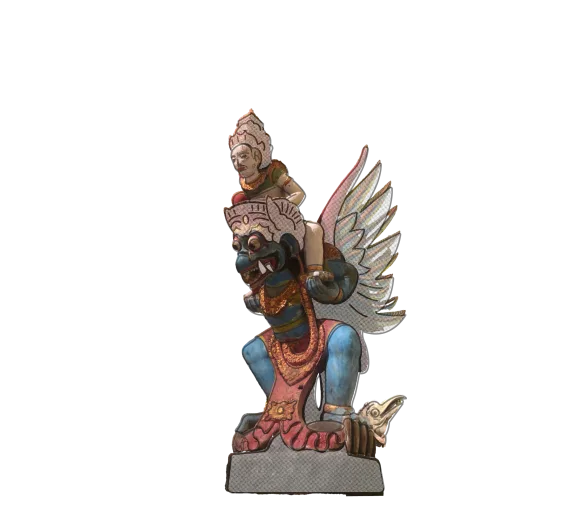
Communities across Southeast Asia expressed such ideas through various forms of material culture. In Java and Bali, Garuda figures carrying Vishnu were placed in sacred spaces as guardians of the boundary between the earthly and the divine. On a southern Thai holy water basin, Garuda signifies supreme authority and protection against evil spirits. Garuda also became a national emblem in both Thailand and Indonesia. In Thailand's Trang Province, a master weaver adapted into her craft Garuda motifs that she observed on official buildings and temples. Thus, the bird also entered the textile traditions of village weavers. Today, the Garuda emblem spans various aspects of modern life, appearing on passports, official seals and even the name of a national airline.
Garuda is part of epic mythology and everyday life across Southeast Asia; a presence in sacred spaces, ritual objects and community traditions. Garuda does not carry a single fixed meaning, instead communities have interpreted the mythical bird to express protection, authority, devotion and identity in different ways. Through these diverse yet shared expressions, Garuda became an enduring thread in Southeast Asia's shared heritage.

Back