
Makara timeline

























Reflection
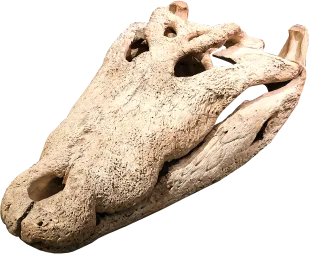
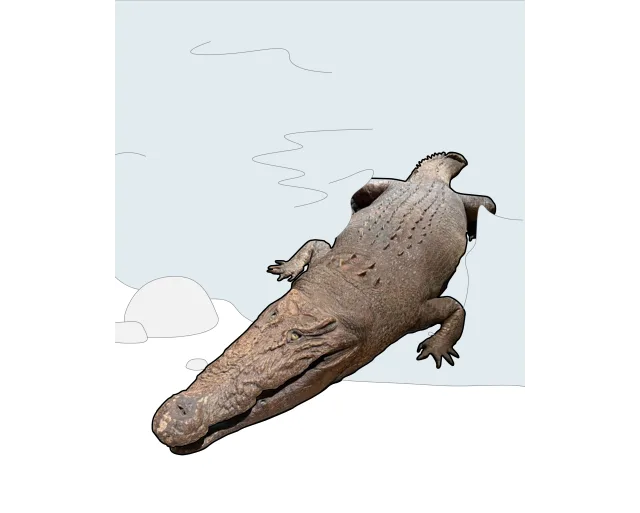
The crocodile is integral to the aquatic ecosystems of rivers, estuaries and coasts across Southeast Asia and has long been part of the lives of the communities who share these waters. As an apex predator, its power and unpredictability inspired stories that reflect both respect and caution. In the Malay world, crocodiles are associated with sacred keramat; in the Hikayat Hang Tuah, a white crocodile appears as an omen during the search for a lost royal crown; while on Timor a local creation story states that the island itself was formed from the body of a crocodile.
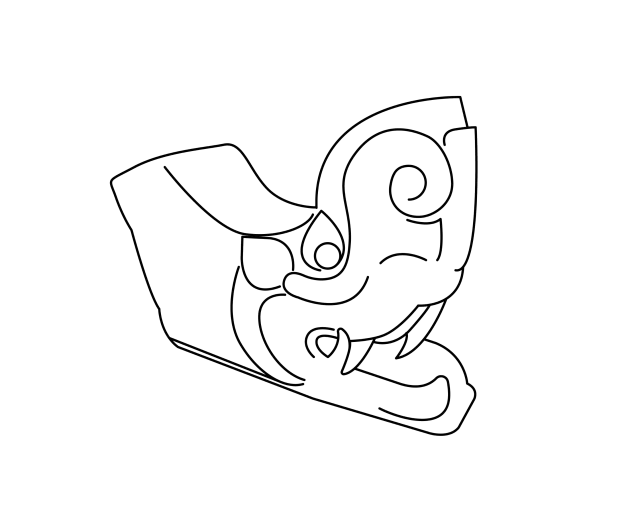
Another creature, the makara, has also long been part of the lives of communities across Southeast Asia. Combining the jaws of a crocodile with the body of a fish, the horns of a goat and the trunk of an elephant, the makara brought together qualities drawn from creatures of both land and water. As the vehicle of Hindu river deities such as Ganga, it became associated with the life-giving power of water. Its composite form also made it a guardian of thresholds, and it was placed at temple entrances where it marked the passage between the everyday and the sacred. This creature can be seen at Borobudur in Java and on gold plaques from Óc Eo in Viet Nam and Pyu in Myanmar that date from the fourth to the sixth centuries.
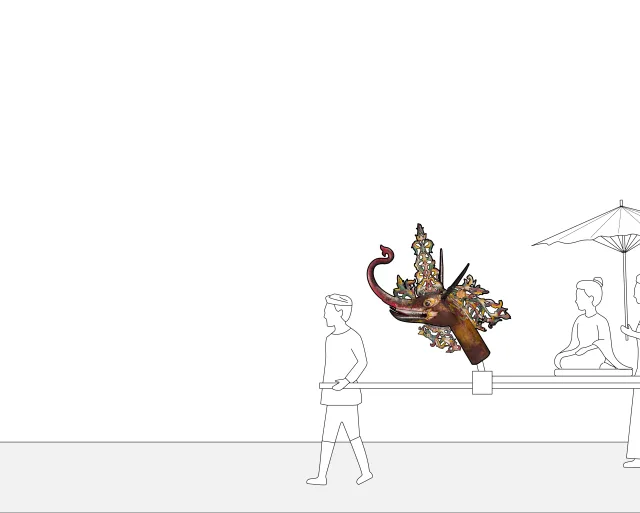
The objects in this trail reveal how communities in Southeast Asia reinterpreted the makara and represented it in various beliefs and practices. A makara palanquin ornament from Pattani was an auspicious accompaniment on circumcision processions for Muslim Malay boys, while a granite makara sculpture from Sungai Mas shows how early communities revered it as a guardian of the thresholds between the everyday and the sacred.
Together, these objects show how communities adapted the makara to express ideas about water, protection, transformation and the crossing of boundaries. Drawing on the natural world while extending beyond it, the makara connects rivers and seas, ritual and everyday life and the many cultural traditions that have shaped Southeast Asia.