




Water bird timeline


Section : Sky
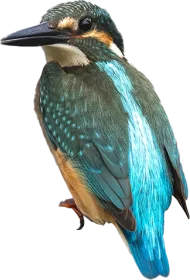
Scientific Name / Taxonomy: Alcedo atthis bengalensis Gmelin, 1778; Coraciiformes: Alcedinidae


Section : Cosmology Religion &Spirituality
Collection: Folklore Museum, The Institute for Southern Thai Studies


Section : Mythology & Folklore
Period: Late 19th or early 20th century
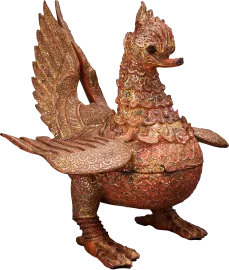
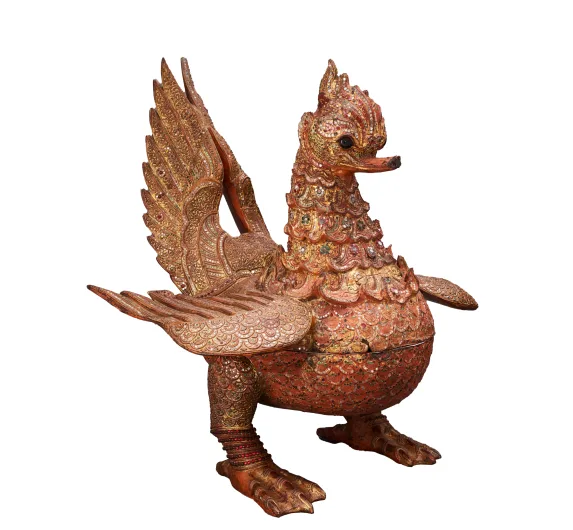
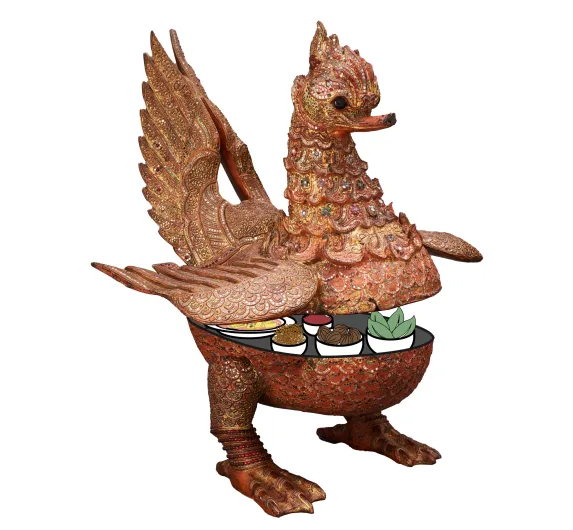
Place of Production / Findspot: Myanmar, Mandalay
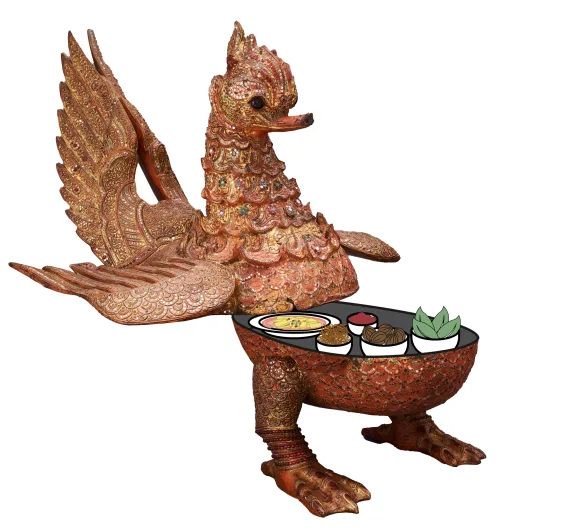
Material: Lacquered and gilded wood, inlaid glass and mirrors
Dimensions: Length 55 cm, Height 53 cm, Width 47 cm
Collection: Asian Civilisations Museum
Other Information / Object Biography: Accession No. 1999-00795.


Section : Harnessing Nature’s Power
Period: Swan-Shaped Holy Water Pot
Period: 19th century
Place of Production / Findspot: Thailand
Material: Wood, glass
Dimensions: Height 35 cm, Width 18 cm
Collection: National Museum Bangkok


Section : Ceremonies Rituals & Festivals
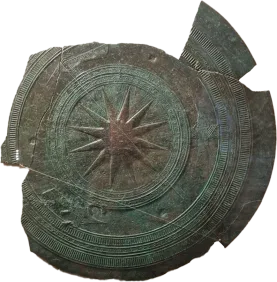
Period: 16th–17th century CE
Place of Production / Findspot: Thailand
Material: Bronze
Dimensions: Height 20 cm, Length 30.7 cm
Collection: National Museum Bangkok
Other Information / Object Biography: King Rama VII received the object during his royal visit to Northern Thailand in 1926 and later bestowed it upon the museum.


Section : Ceremonies Rituals & Festivals
Period: 1925 AD
Place of Production / Findspot: Thailand
Material: Wood, brass, silk
Dimensions: Height 94 cm, Width 35.5 cm
Collection: National Museum Bangkok


Section : Trade and Maritime Navigation
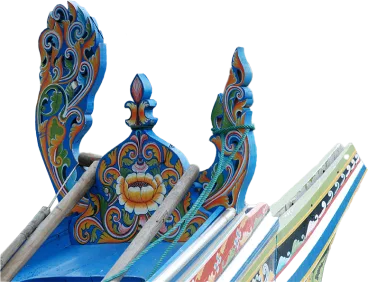
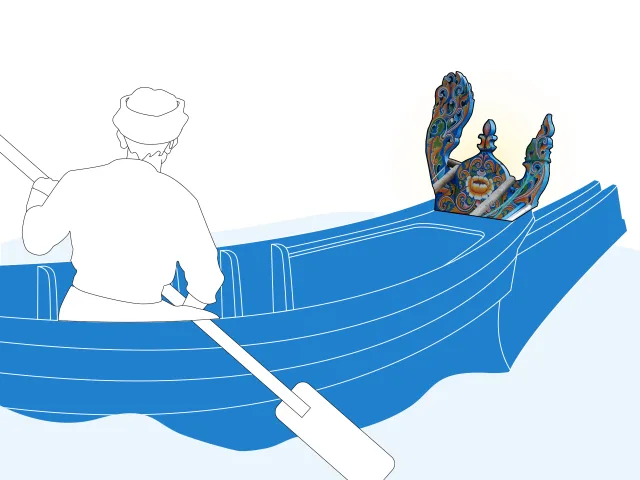
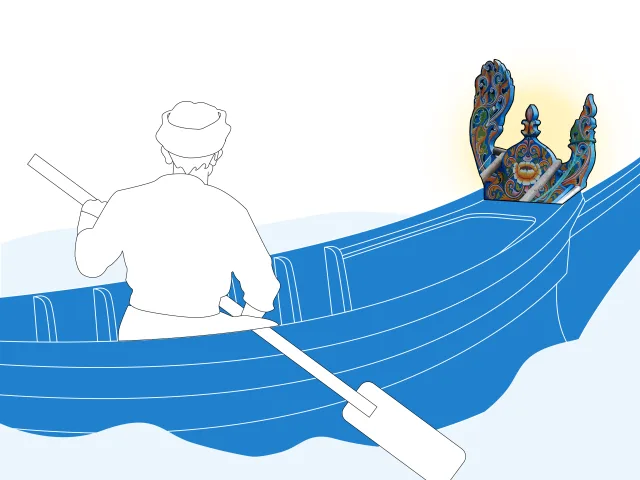
Place of Production / Findspot: Pattani, Narathiwat, or Yala, Southern Thailand
Material: Hardwood (Cengal – Neobalanocarpus heimii, Meranti – Shorea genus, Jelutung – Dyera costulata, or Pulai – Alstonia angustiloba)
Dimensions: Length 100 cm, Height 40 cm
Collection: Department of Museums Malaysia


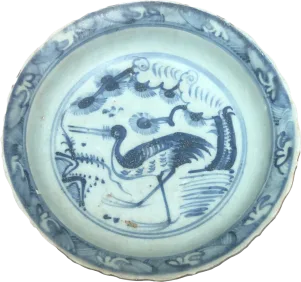
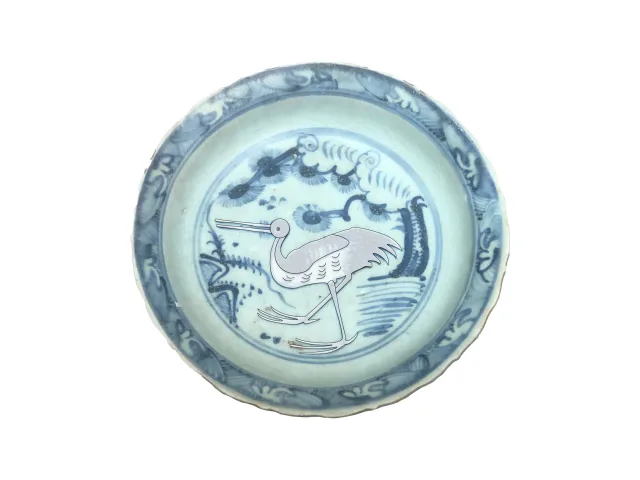
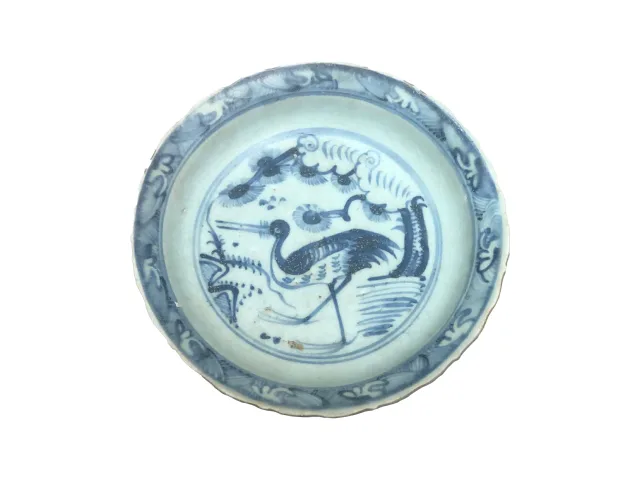
Section : Trade and Maritime Navigation
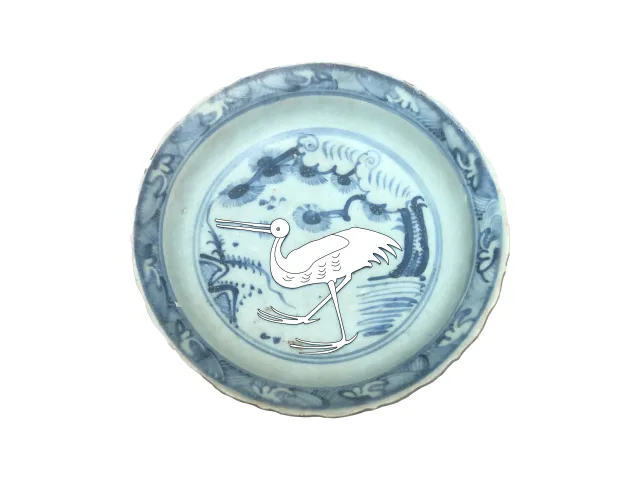
Period: 15th–16th centuries AD
Place of Production / Findspot: Jingdezhen, Jiangxi Province, China
Material: Chinese blue and white ceramic
Collection: Brunei Darussalam Maritime Museum


Section : Ruling Diplomacy & Defense
Period: 19th century
Place of Production / Findspot: Kelantan
Material: Kemuning wood (Murraya paniculata), brass plating and bare cast iron
Dimensions: Length 49.5 cm, Width 15.3 cm
Collection: Department of Museums Malaysia


Section : Ruling Diplomacy & Defense
Period: Early 1900s
Material: Bronze
Dimensions: Height 78 cm, Width 20 cm, Depth 38 cm
Collection: Baba & Nyonya Heritage Museum
Other Information / Object Biography: Probably purchased in the early 1900s by the late Mr. Chan Cheng Siew for his house, which is now the Baba & Nyonya Heritage Museum. Currently only one set is on display, on the first floor.
Reflection
Waterbirds are a significant feature of Southeast Asia's rivers, wetlands, floodplains, estuaries, mangroves and coasts, and these birds, including kingfishers, cranes, geese, ducks and egrets, are essential for the functioning of these aquatic ecosystems.
Over millennia, the communities living alongside these birds came to associate them with grace, longevity, wisdom, vigilance, keen observation, harmony, abundance and prosperity, and this association found expression in diverse cultural traditions.
In Hindu mythology the hamsa or hintha (a goose, swan or waterbird) is known as the vahana (mount or vehicle) of Brahma and Saraswati. The mythical hamsa is celebrated in Hindu lore for its legendary capacity to separate milk from water, and in particular drink only the milk while leaving behind the water, representing discernment and the ability to differentiate truth from illusion.
Among Lanna and Mon communities, the hintha became an enduring cultural emblem associated with purity, prosperity and community identity. According to Mon tradition, the Buddha foretold the founding of Bago (Hanthawaddy) after seeing two hintha resting on a single rock rising from the sea.
Along the east coast of the Malay Peninsula, fishing communities perceive the bangau (stork) as possessing a semangat (spirit) that protects boats at sea. Traditional kolek and kolae boats are carved with bangau and anak bangau figures on their prows, reflecting the bird's associations with patience, vigilance and safe return. These practices form part of maritime traditions shared by communities in Peninsular Malaysia and southern Thailand.
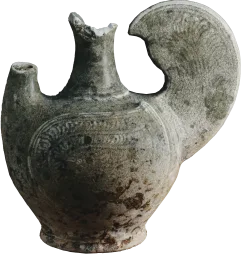
The objects in this trail reveal how communities have incorporated waterbirds into artistic, ceremonial and everyday life. Egret imagery on Đông Sơn bronze drums reflects the importance of wetlands and seasonal cycles. Hamsa-shaped vessels hold consecrated water used in Hindu-Buddhist ceremonies, while cranes on Ming blue-and-white porcelain and Baba & Nyonya ornaments express wishes for longevity, harmony and prosperity. A kingfisher-shaped keris hilt reflects artistic traditions shared between Kelantan and Pattani.
Through these diverse objects, communities wove the qualities of waterbirds into rituals, artisanship and daily life. Living in and along the wetlands and waterways that sustain Southeast Asia, waterbirds continue to connect ecosystems, livelihoods and cultural traditions across the region.


