
Hornbill timeline





























Reflection
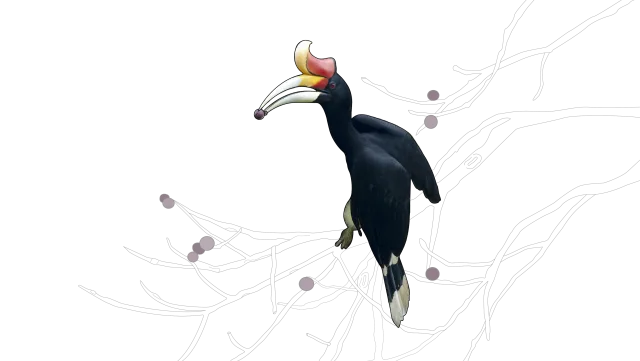
Recognizable by their large bills and distinctive casque, hornbills inhabit the tropical forests of Southeast Asia where they depend on mature trees for nesting and fruiting forests for food. As important seed dispersers, they help sustain the forest ecosystems that have sustained communities across Southeast Asia for generations.
The striking appearance, distinctive calls and habits of hornbills have resonated with the people of the region who have incorporated hornbills into indigenous knowledge, ritual practices and visual culture over millennia. Representations of hornbills appear in rock art from Kalimantan, on Neolithic earthenware from Sarawak and on Đông Sơn bronze drums from Viet Nam.
The hornbill is admired across Southeast Asia, but nowhere is this bird more deeply woven into community life than among the Dayak peoples of Borneo, particularly the Iban and the Orang Ulu. Among the Iban, hornbills are regarded as sacred beings, bearers of good omens and intermediaries between the human and spirit worlds. Among the Orang Ulu, they also express ancestry, prestige and social standing. Reading the calls and flight paths of birds was historically a sacred practice that guided major decisions, from clearing land for cultivation to preparing for war.
These relationships are embodied in the stories of Sengalang Burong, the Iban deity of the spirit world, warfare and divination. Although Sengalang Burong takes the form of a Brahminy kite, he is closely connected to hornbills as these birds carry messages between the divine and human worlds. During the Gawai Burong festival, communities honour Sengalang Burong by carving and raising monumental kenyalang statues that provide protection, health and prosperity for the community.
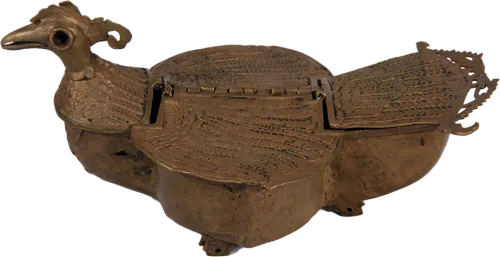
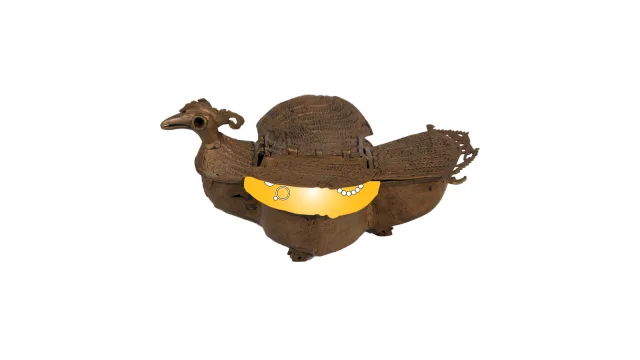
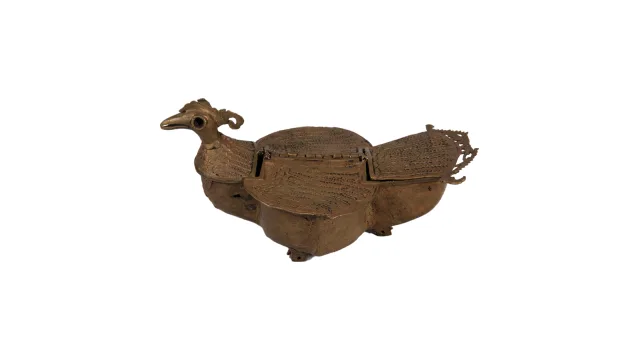
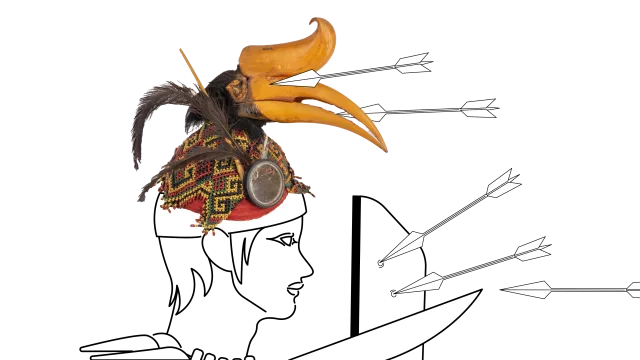
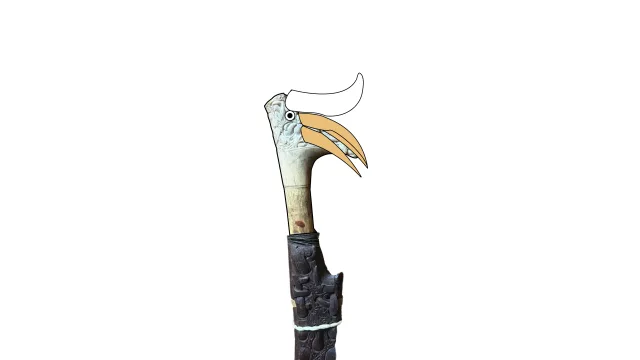
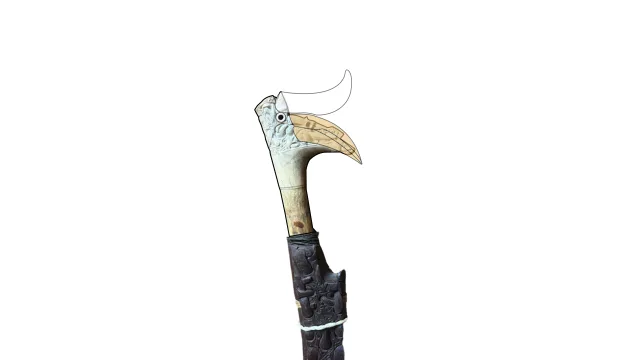
The objects in this trail reveal how hornbills continue to connect forests, ritual and communities. Hornbill motifs were incorporated into calapa containers, sulang vessels, weapons and tools such as the badau, and hornbill skulls and feathers were elements of the katapu (war helmet).
Together, these objects show how the traditional knowledge of communities, gained through close observation of the natural world, was transformed into enduring artistic, ceremonial and material traditions. Today, the hornbill continues to connect forest life, spiritual practices and communities across Borneo while contributing to Southeast Asia's shared heritage.