



Fish timeline
-
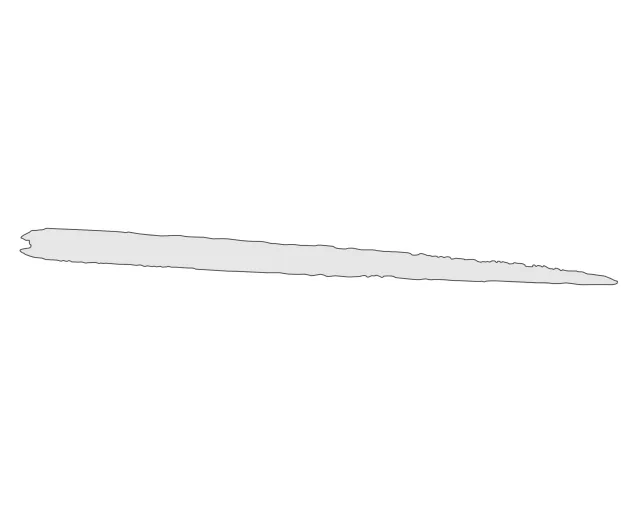
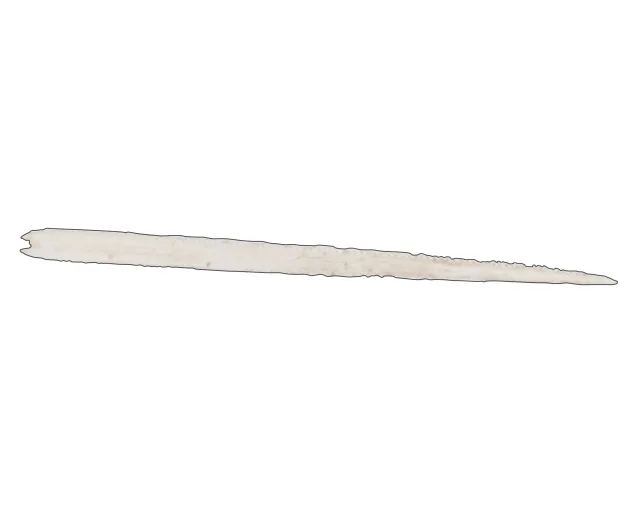
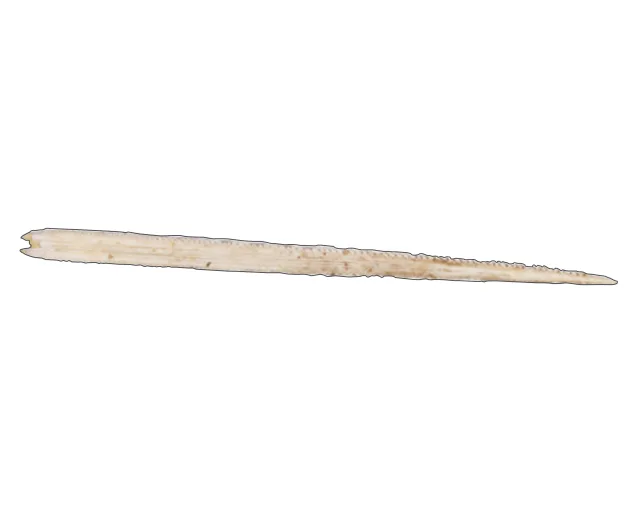
Spotted White Eagle Ray Bone (Aetobatus ocellatus)

-
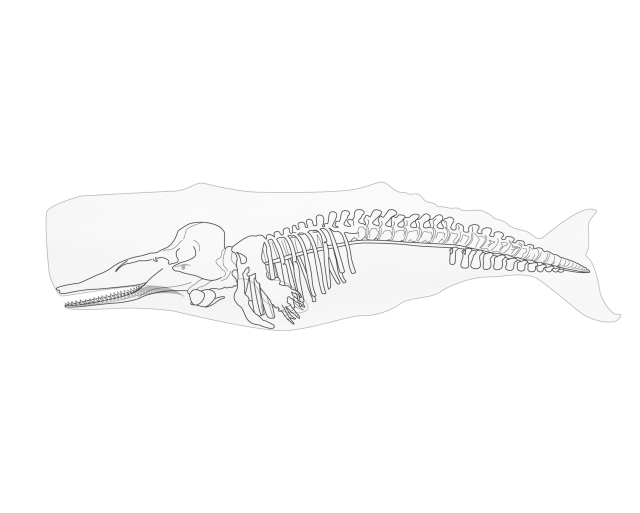
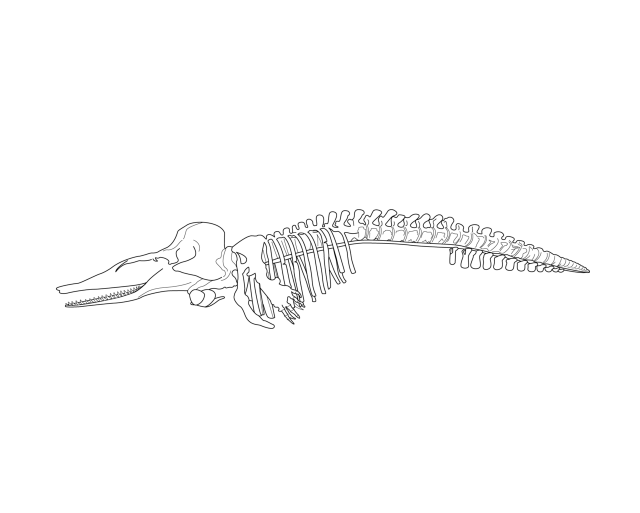
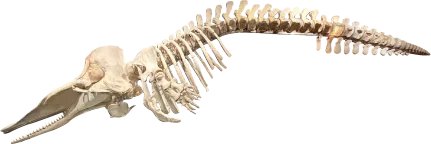
Skeleton of Singapore’s First Recorded Sperm Whale (Physeter macrocephalus)
-
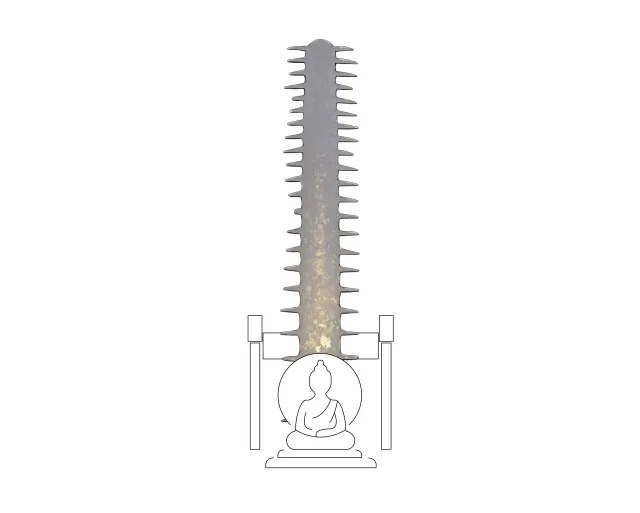
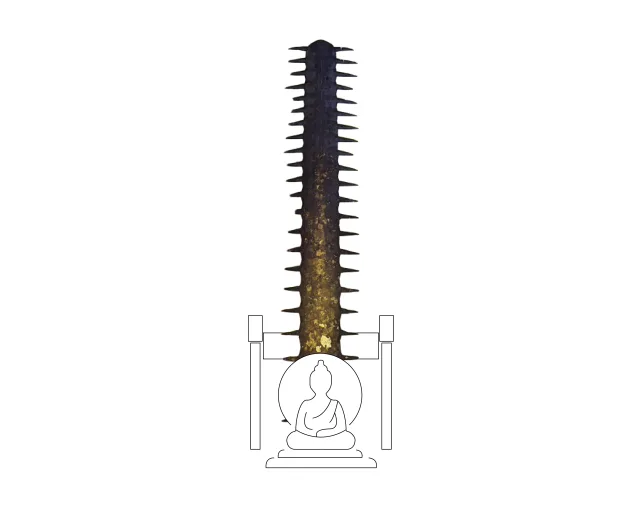
Rostrum of the Largetooth Sawfish

-
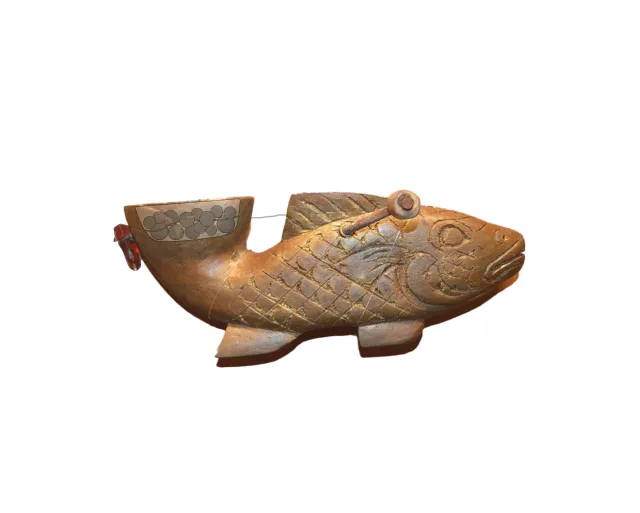
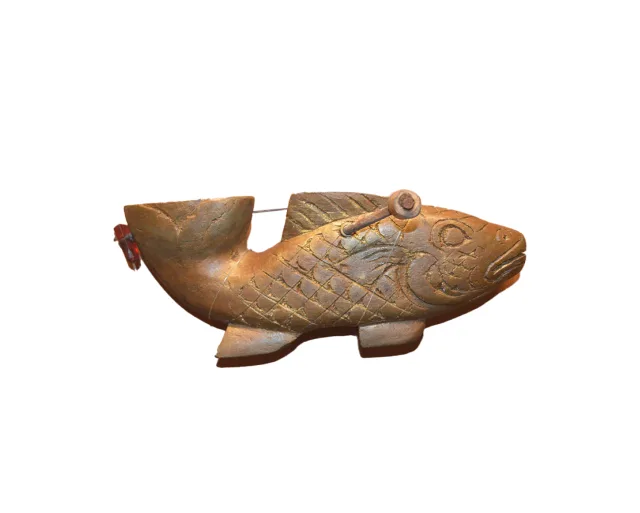
Wooden Chalk-Line Reels (Marking Gauges)
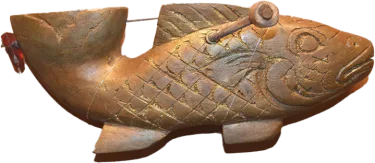
-
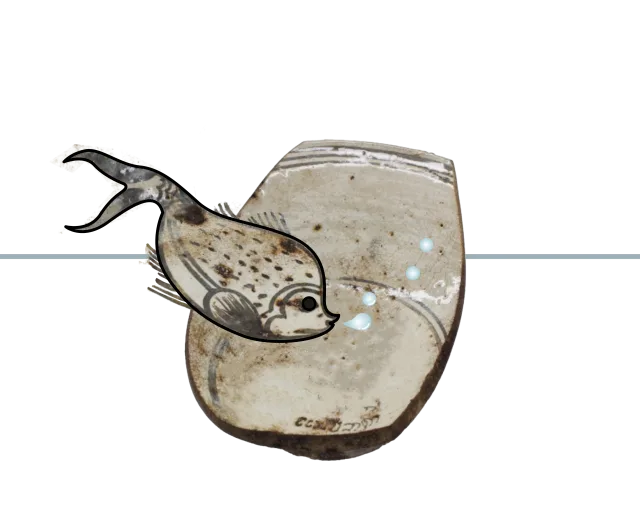
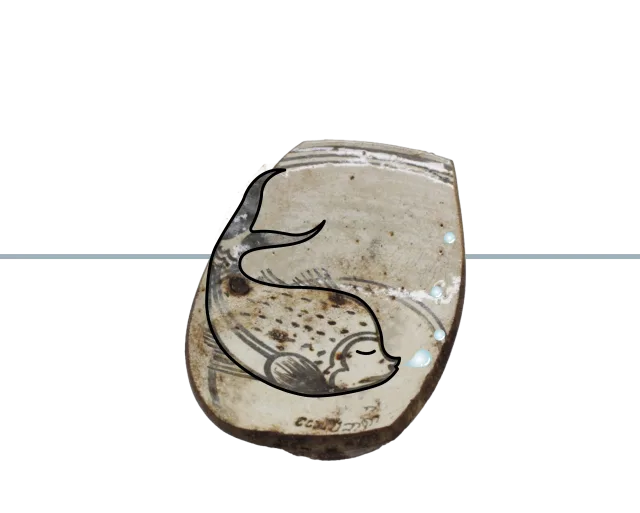
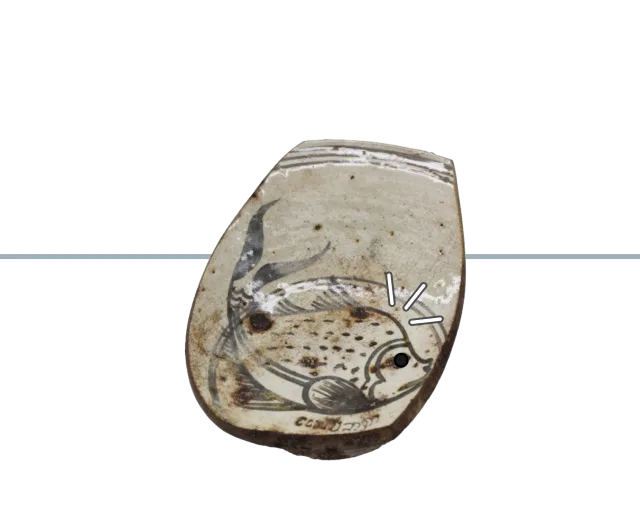
Sukhothai Celadon Bowl Fragment with Fish Design (Ceramic Shard)
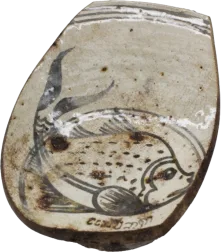
-
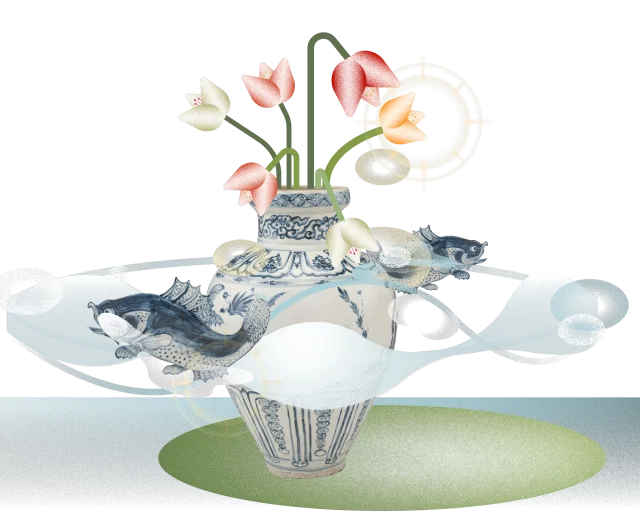
Jar Decorated with Fish and a Beast
-
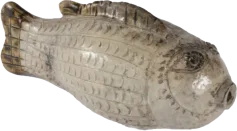
-

Section : Waters
Period: 21st century
Place of Production / Findspot: Thailand
Dimensions: (1) Width 18.5 cm, Length 1.1 cm; (2) Width 18 cm, Length 1 cm; (3) Width 15.8 cm, Length 1 cm; (4) Width 14 cm, Length 0.6 cm
Collection: National Museum Bangkok
Specimen / Object Biography: Donated by Mr. Sakorn Wittayanukorn on 2 February 1958.


Section : Waters
Name: Skeleton of Singapore’s First Recorded Sperm Whale (Physeter macrocephalus)
Period: 2015
Place of Production / Findspot: Discovered off Jurong Island, Singapore
Dimensions: Length 1,060 cm
Collection: Lee Kong Chian Natural History Museum, Singapore


Section : Cosmology Religion & Spirituality
Scientific Name / Taxonomy: Pristis pristis
Period: 21st century
Findspot: Jao Pho Khao Tok Shrine, located inside Ratchakhrue Worawihan Temple, Talat Phlu, Thon Buri District, Bangkok
Dimensions: Length 155 cm, Width 26 cm (PPT: Length 122 cm, Width 28 cm)
Collection: National Museum Bangkok
Specimen / Object Biography: Donated by Upasika Panawi, 20 Soi Nana Nuea, Phra Khanong District, Bangkok province, to the National Museum Bangkok on 31 October 1990


Section : Materials Science & Technology
Place of Production / Findspot: Tha Khuen Sub-district, Tha Sala District, Nakhon Si Thammarat Province
Material: Indigenous Hardwood
Dimensions: Piscine/Fish Form — Width 10 cm, Length 25 cm; Serpent/Ophidian Form — Width 12 cm, Length 20 cm, Height 10.5 cm
Collection: Folklore Museum, The Institute for Southern Thai Studies
Other Information / Object Biography: Exhibited in the Arts and Crafts Room (Hong Silpa Hattakam), Folklore Museum, Institute of Southern Thai Studies.


Section : Trade and Maritime Navigation
Period: Ca. 16th century CE
Place of Production / Findspot: Thailand
Material: Ceramic, glazed
Dimensions: Height 6.8 cm, Width 14 cm
Collection: National Museum Bangkok
Other Information / Object Biography: Given by Pol Gen Monchai Phankhongchuen on 11 August 1976. Provenance unknown.


Section : Trade and Maritime Navigation
Period: Late 14th or 15th century
Place of Production / Findspot: Northern Vietnam
Material: Stoneware
Dimensions: Diameter 38 cm, Height 60 cm
Collection: Asian Civilisations Museum
Other Information / Object Biography: Accession No. 2014-00949.


Section : Crafts of Everyday
Period: Ca. 12th century CE
Place of Production / Findspot: Thailand
Material: Ceramic, glazed
Dimensions: Length 18 cm, Width 7.3 cm
Collection: National Museum Bangkok


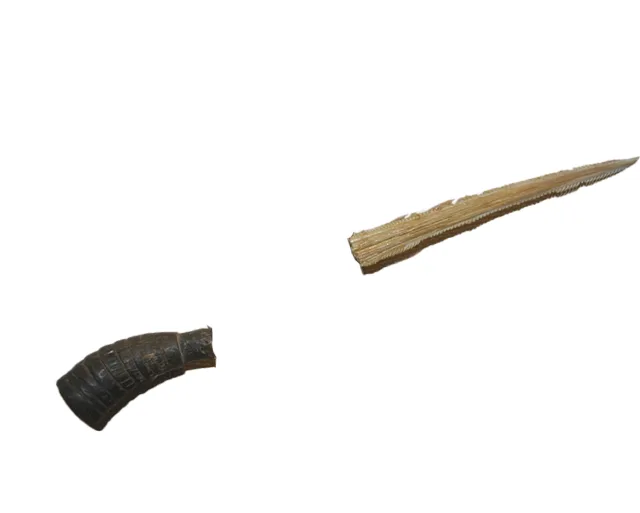
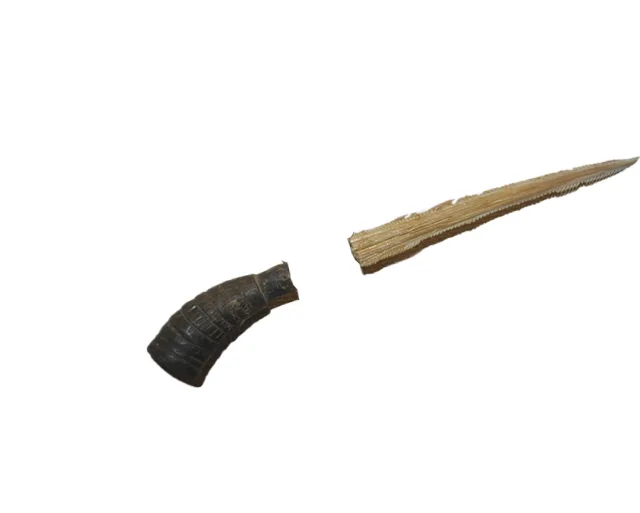
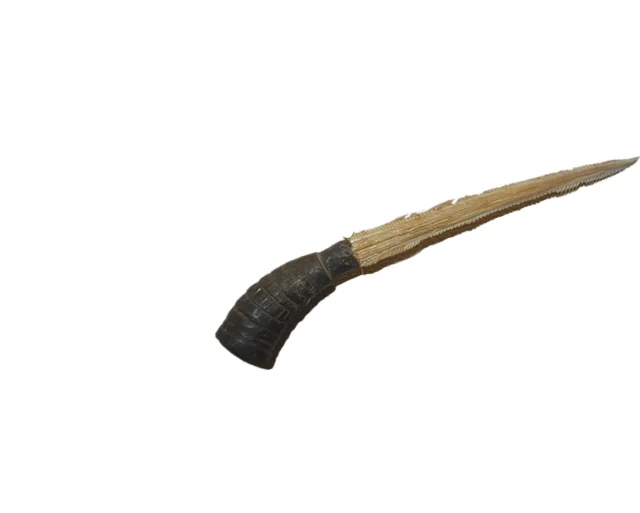
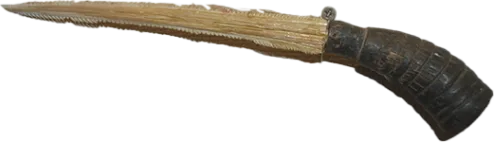
Section : Ruiling Diplomacy & Defense
Place of Production / Findspot: Mueang Pattani District, Pattani Province
Material: Stingray caudal spine (barb) and animal horn
Dimensions: Blade (Stingray Spine/Barb) — Length 16.3 cm, Blade Width 1.3 cm; Base Width 1.8 cm; Hilt (Handle) — Made of animal horn, Length 8 cm
Collection: Folklore Museum, The Institute for Southern Thai Studies
Other Information / Object Biography: Contributed by Mr. Pichai Kaewkhao. Exhibited in the Knives and Weaponry Room (Hong Mit lae Sattrawut), Folklore Museum, Institute of Southern Thai Studies.
Reflection
The seas, rivers, lakes, mangroves and floodplains of Southeast Asia historically supported an extraordinary diversity of fish and aquatic mammals that shaped the settlements, food systems, livelihoods and networks of exchange that emerged in the region. Communities living alongside these waters developed rich knowledge of aquatic life and incorporated the behaviours and attributes of the various species into everyday life and ritual. Across Southeast Asia, fish came to embody the life-giving qualities of water, including fertility, abundance and continuity.
Fish appear across many of the religious and literary traditions that have shaped Southeast Asia. In Hindu tradition, Matsya, the fish incarnation of Vishnu, saves the world, the sacred Vedas and the seeds of life from a cosmic flood. In Cambodian, Thai and Lao retellings of the Ramayana, Suvannamaccha – the golden fish – becomes part of the story of Rama and Hanuman. Taoist traditions tell of the great fish Kun, whose transformation into the bird Peng represents immense potential, while Islamic traditions remember both the great fish Bahamut and the story of the Prophet Yunus as symbols of cosmic order and spiritual reflection.
The objects in this trail reveal how communities historically incorporated fish and other aquatic creatures into material, artistic and ceremonial life. Vietnamese and Thai ceramics were decorated with fish, reflecting their enduring associations. The rare sawfish came to be regarded as a guardian in Thai and Malay traditions, while stingray barbs became weapons, talismans and sacred objects among coastal and seafaring communities. Aquatic mammals occupied sacred roles: whales were revered as protectors along the coast of Viet Nam, while on the island of Lembata in eastern Indonesia whale skulls were venerated at sacred sites. The skeleton of a sperm whale likewise speaks to long relationships between people and the ocean, from veneration to conservation.
These examples reveal an interconnected maritime world in which trade and exchange led to the circulation of ideas, art and technologies across the region. Together, these objects show how fish and aquatic mammals continue to connect Southeast Asia's waters, communities and shared heritage.