




Bird timeline
Section : Sky
Scientific Name / Taxonomy: Pavo muticus
Collection: Lee Kong Chian Natural History Museum


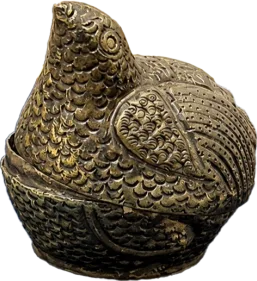
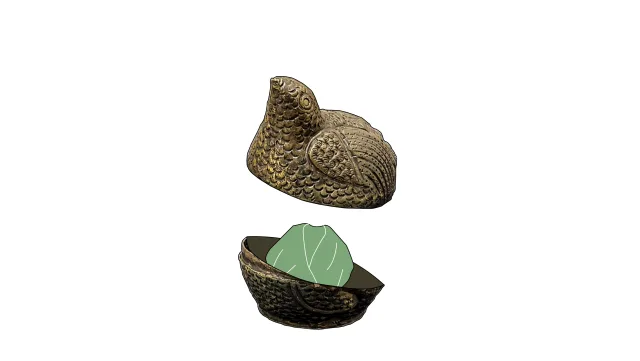
Section : Cosmology Religion & Spirituality
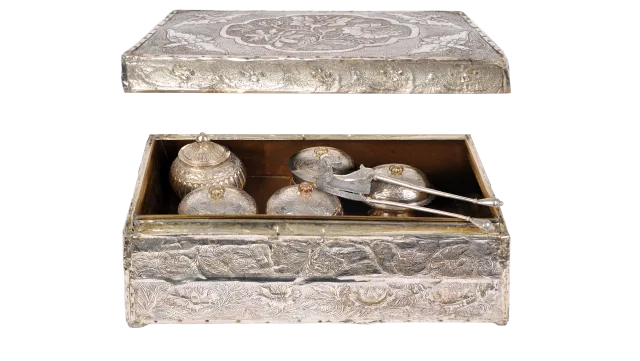
Place of Production / Findspot: Mueang Nakhon Si Thammarat District, Nakhon Si Thammarat Province
Material: Sterling Silver / Argentum Alloy (Lo-ha Ngoen)
Dimensions: Width 4.2 cm, Length 5.5 cm, Height 5.2 cm
Collection: Folklore Museum, The Institute for Southern Thai Studies
Other Information / Object Biography: Data recorded and catalogued in 1990 (B.E. 2533). Exhibited in the Metalwork and Metallurgy Culture Room (Hong Watthanatham Khruang Lo-ha lae Lo-hat), Folklore Museum, Institute of Southern Thai Studies.


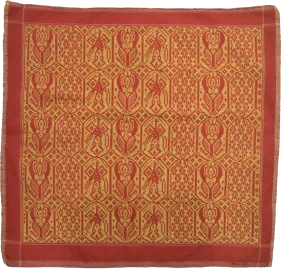
Section : Mythology & Folklore
Material: Discontinuous supplementary weft patterned cotton (Pha Fai Tho Yok Dok)
Dimensions: Width 48 cm, Length 47 cm
Collection: Folklore Museum, The Institute for Southern Thai Studies
Other Information / Object Biography: Woven by Mrs. Plek Nuiphol. Exhibited in the Local Textile Exhibition Room (Hong Pha Tho Phuen Mueang), Folklore Museum, Institute of Southern Thai Studies.
Condition: Excellent / complete pristine condition (Saphap Sombun).


Section : Materials Science & Technology
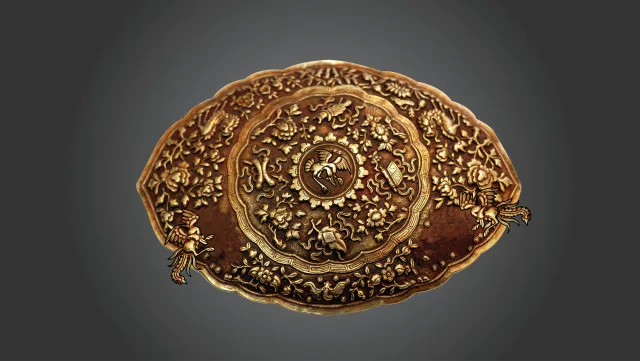
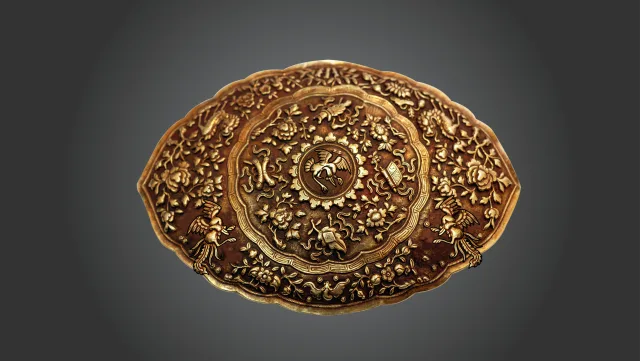
Media Resources Unit, Department of Museums Malaysia Peranakan Pending (top)
Period: 20th century
Place of production / Findspot: Straits Settlement in Malaya
Material: Solid gold
Dimensions: Length: 15.5 cm, Width: 11.5 cm
Collection: The National Textile Museum, Department of Museums Malaysia
Other information / Object biography: A solid gold Nyonya buckle embossed with mystical Chinese motifs of phoenix, quilin and flowers. It is of Chinese workmanship and was originally from Straits Settlement dated early 20th century. Malay Pending (bottom)
Period: Early 20th century
Place of production / Findspot: Malaysia
Material: Brass and niello
Dimensions: Length: 31.5 cm, Width: 13.2 cm
Collection: The Perak Museum, Department of Museums Malaysia
Other information / Object biography: A beautiful niello buckle work carved with Persian numerals. It was worn as a waist accessories and an amulet dated early 20th century.


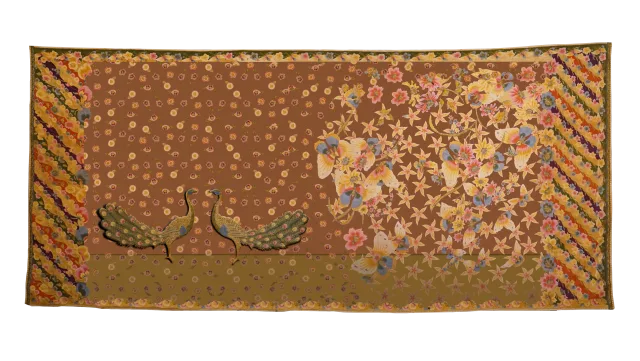
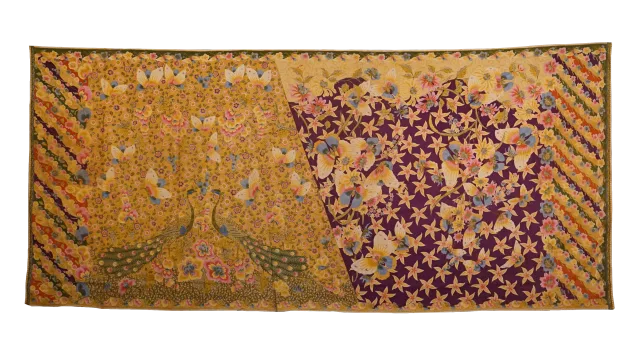
Section : Crafts of Everyday
Period: 20th century
Place of Production / Findspot: Java, Indonesia
Material: Cotton, Natural Dye
Collection: Museum Nasional Indonesia
Dimensions: 240 cm; 107 cm


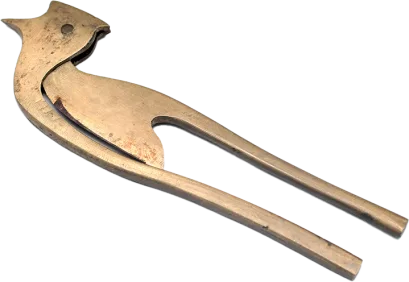
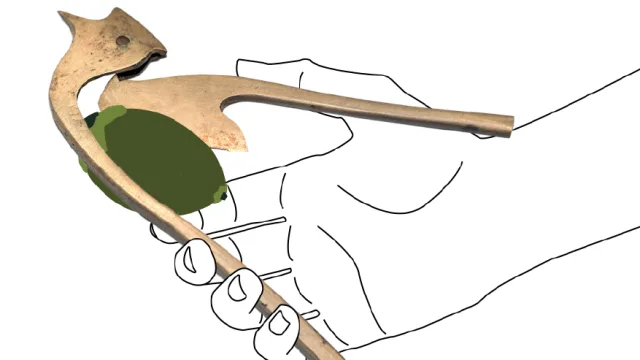
Section : Crafts of Everyday
Period: Late 18th – 19th century
Place of Production / Findspot: Kampong Ayer, Brunei Darussalam
Material: Copper / brass
Dimensions: Length 17 cm, Width 5 cm
Collection: Malay Technology Museum, Brunei Darussalam


Section : Ruling Diplomacy & Defense
Period: Reign of the Sultan Abdul Samad 1859–1880
Place of Production / Findspot: Selangor, Malaysia
Material: Silver, wooden base and metal
Dimensions: Length 33.4, Width 19.2, Height 15.2 cm
Collection: Department of Museums Malaysia
Other Information / Object Biography: E1389.1963.HA.181


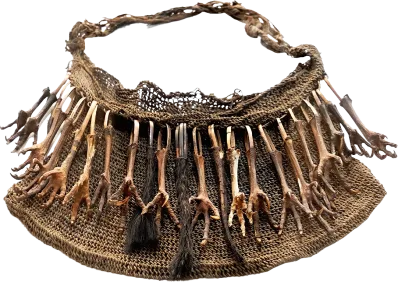
Section : Ruling Diplomacy & Defense
Period: 20th century
Place of Production / Findspot: Papua
Material: Fiber, cassowary feet, pig tail
Dimensions: Length 30 cm, Width 40 cm
Collection: Museum Nasional Indonesia
Reflection
Southeast Asia is home to more than 1,200 bird species and is part of one of the world's great avian migratory routes: the East Asian–Australasian Flyway, which links tropical, temperate and Arctic landscapes.
Birds have long shared Southeast Asia's forests, wetlands, rice fields, mangroves, estuaries and coasts with the peoples of the region. Over millennia, birds came to symbolize beauty, wisdom, courage, discernment, prosperity, protection and spiritual power, as recorded in stories, scripture and legends. In the Vattaka Jataka, a young quail overcomes a wildfire through the power of virtue, becoming a symbol of protection and loving-kindness throughout the Theravada Buddhist world. Hindu traditions portray birds as the divine mounts (vahana) of the gods, including the peacock of Kartikeya and the hamsa of Brahma and Saraswati. Similarly, Islamic traditions portray birds as celestial messengers and examples of trust in the divine. In Iban tradition, Sengalang Burong, the god of war, communicates with humans through omen birds and has the earthly form of the Brahminy kite.
The objects presented in this trail reveal how communities have incorporated birds into everyday life, rituals, ceremonies and art. The quail of the Vattaka Jataka appears on a silver casket used for betel sharing, connecting Buddhist teachings with the social traditions of Malay and Thai communities. In Brunei, a bird from the paddy fields decorates the handle of a copper betel cutter, while Peranakan belt buckles include birds as symbols of protection and prosperity.
These objects convey how birds are part of both ecosystems and imagination, everyday life and ritual, carrying meanings that communities express in their artistic traditions and material cultures. In doing so, birds connect landscapes and communities across Southeast Asia.


