
Section : Waters
Scientific Name / Taxonomy: Cliona patera
Place of Production / Findspot: Singapore
Collection: Lee Kong Chian Natural History Museum
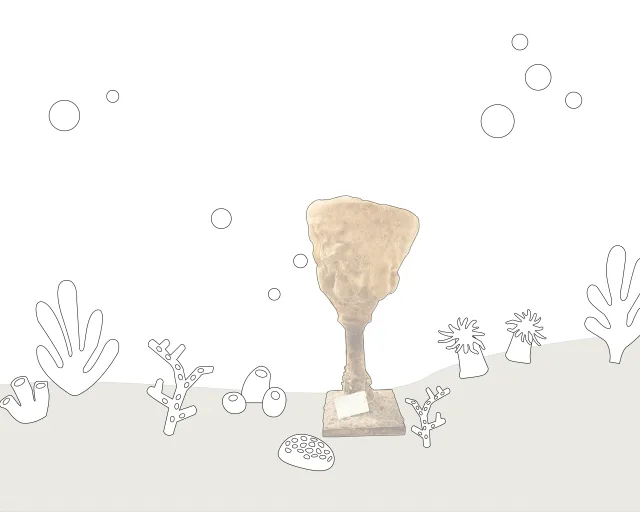
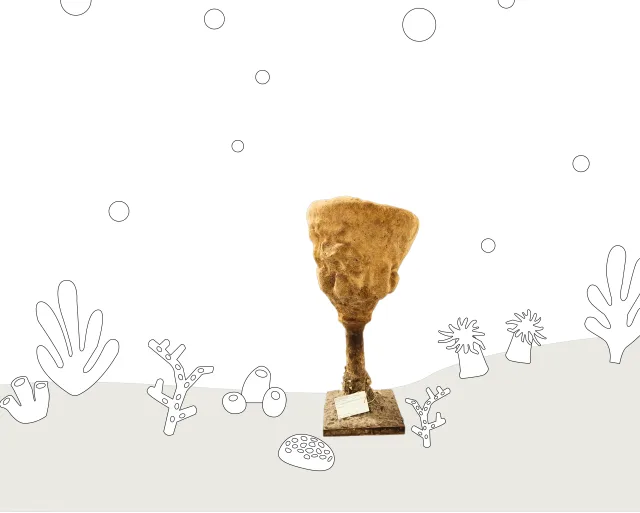
Caption: The Neptune Cup Sponge (Cliona patera) is shaped like a cup or goblet, growing to over a metre in both height and diameter — a scale, by some accounts, large enough for a small child to sit inside its basin. It lives in marine soft sediment habitats across the Indo-West Pacific, with populations recorded in Singapore, Thailand, and the islands of Koh Rong Sanloem and Koh Koun in Cambodia. The Neptune Sponge was described by the naturalist Thomas Hardwicke in 1820, thus making it the first sponge species formally described from the island of Singapore. Its unusual shape and immense size captured scientific and public attention for the next two centuries. This specimen in the LKCNHM was collected more than 100 years ago, from a time when the sponge was still a familiar presence in regional waters. Its elegant goblet-like form and unusual size made it a coveted museum specimen, fuelling over-collection and rapid decline: abundant in the early 1900s, it had gone entirely unseen by the late 1900s. In 2011, two living Neptune Cup Sponges were discovered in the Singapore Straits, within a marine environment heavily transformed by coastal reclamation. Since then, populations have been found in various parts of Southeast Asia. In a region where coastal environments are under sustained pressure, the Neptune Cup Sponge's reappearance in profoundly altered waters is a reminder that the natural world can still surprise.


Section : Ceremonies Rituals & Festivals
Period: Prehistoric period
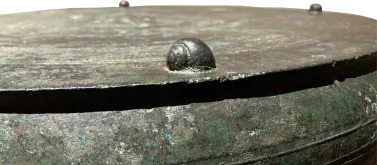
Place of Production / Findspot: Thung Yang District, Uttaradit Province
Dimensions: Height 53 cm, Diameter 65 cm
Collection: National Museum Bangkok
Specimen/Object biography: Discovered in Thung Yang District, Uttaradit Province. Sent by Mr. Hueng Mongkol in 1927.
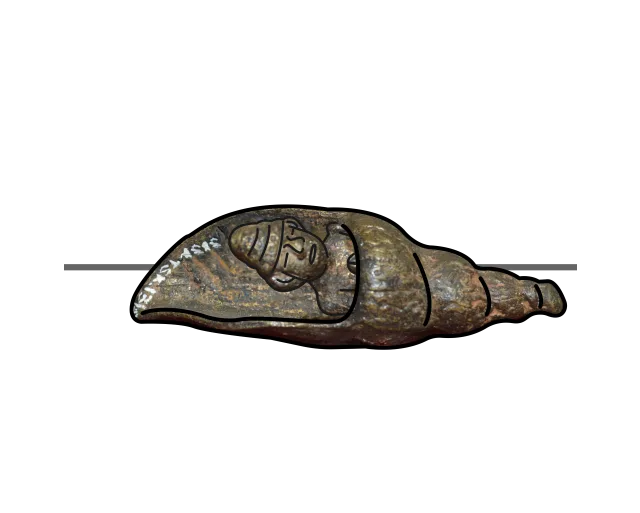
Other Information: Bronze drums are evidence linking advanced metallurgical knowledge to rituals, beliefs, and relationships among people in Southeast Asia. They have been found in numerous areas, including southern China, Myanmar, Thailand, Laos, Cambodia, Malaysia, Indonesia, and the Philippines. It is believed that bronze drums were used in prayers for rain and fertile soil. In some regions, they were also associated with death rituals. Furthermore, some drums are decorated with aquatic animal motifs such as frogs, pairs of frogs, or shellfish.
Reflection
For millennia, seashells have connected the coasts, rivers and inland communities of Southeast Asia. Carried far beyond the shores from which they originated, shells circulated as currency and artistic materials for ornaments, furniture and ritual objects.
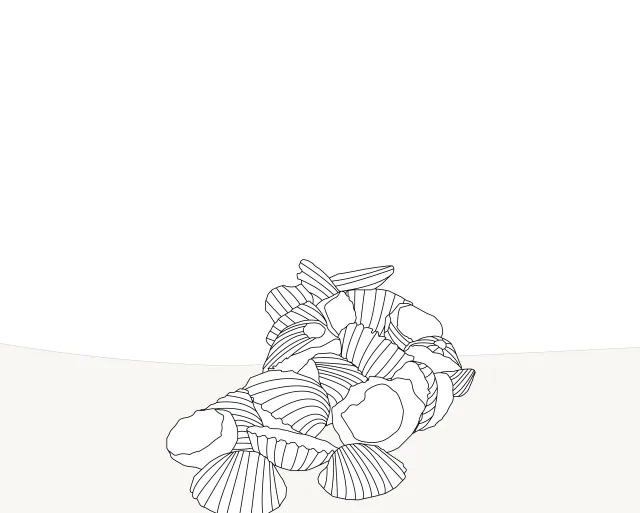
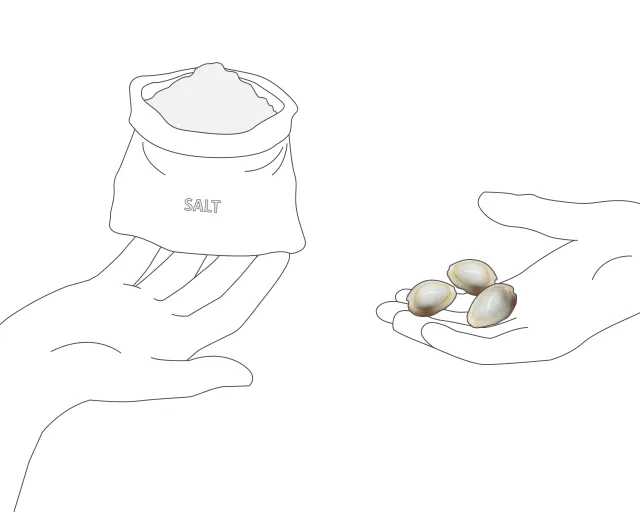
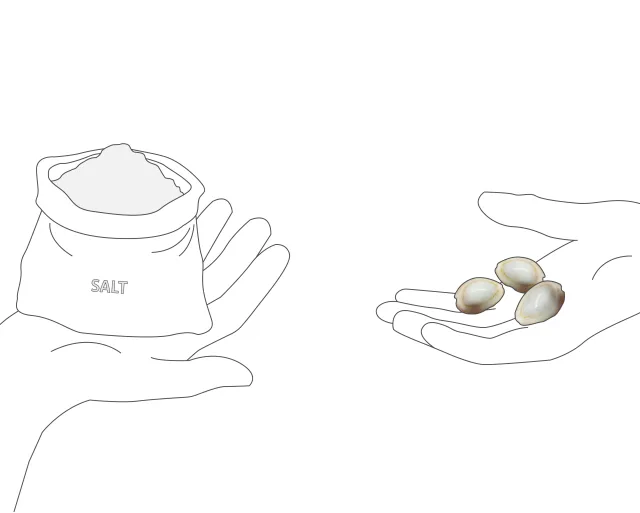
Archaeological excavations have uncovered shell motifs and shell beads and bracelets across the region, from early sites in Island Southeast Asia and Timor-Leste to Neolithic and Bronze Age burials on the mainland. Spiral designs inspired by marine snail shells appear on Ban Chiang pottery and Đông Sơn bronze drums, revealing the shell's enduring place in the region's culture since the Bronze Age. Early communities incorporated shells into everyday and ceremonial life. Cowries circulated widely in networks of exchange as monetary tokens and ritual objects, while shell ornaments used in burials expressed identity and social value.
Across mainland and island Southeast Asia, shells came to be associated with water, life, fertility, health, prestige and knowledge, reflecting close relationships with marine environments and long-standing trade connections between communities.
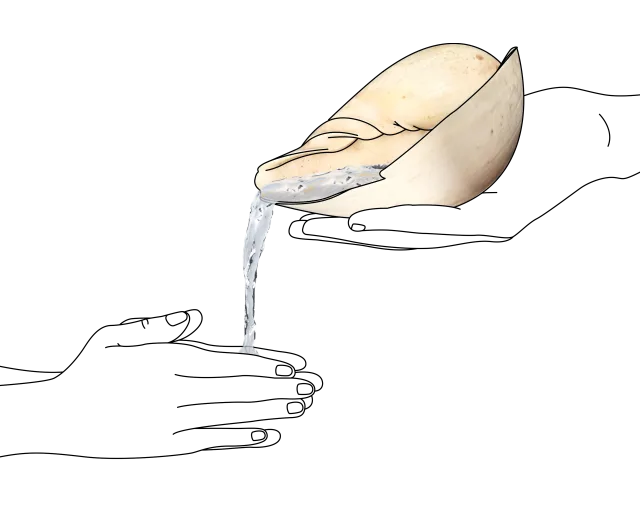
As shells were transported inland, they acquired new meanings and uses. Communities valued them not only for their beauty and durability but also for the skill required to gather and shape them. In Borneo, Dayak communities fashioned shells into ornaments and prestige objects. With the spread of Hinduism and Buddhism, the shankha (conch shell) acquired additional ritual significance. It became one of the principal attributes of Vishnu, was sounded to begin ceremonies and proclaim victories, and was recognized as one of Buddhism's Eight Auspicious Symbols. In Khmer communities, conch water formed part of ceremonial practice, expressing blessing, purity and legitimacy.
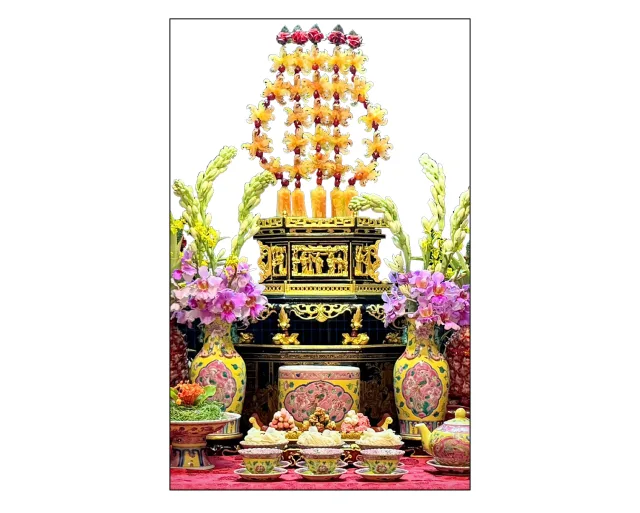
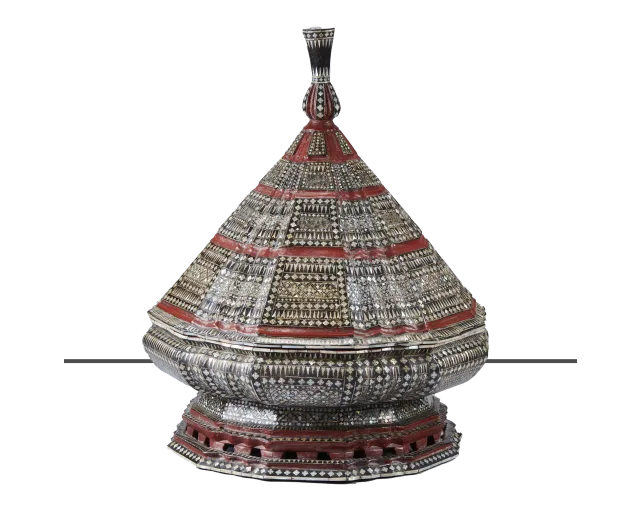
The objects in this trail reveal how communities across Southeast Asia have used shells to express symbolic meanings. From prehistoric ornaments and Đông Sơn drums to Hindu-Buddhist ritual vessels, jewellery, decorations and Peranakan furniture, these objects show how shells were used directly and re-imagined in artistic form across diverse cultural traditions. Together, they reveal seashells as enduring materials of connection, linking coasts and inland communities, everyday life and ceremony, and influencing the many networks that have shaped Southeast Asia's shared heritage.